

New Zealand greenhouse gas levels hit record highs threatening catastrophic glacier melts
Government report finds the country could be hit with more frequent and intense heatwaves, as well as damaging storms and cyclones New Zealand could be hit with more frequent and intense heatwaves and catastrophic glacier melts in the near future, as greenhouse gas levels hit record highs, a new report about the nation’s climate has revealed. Released on Wednesday, the Our Atmosphere and Climate 2026 report shows New Zealand is experiencing mounting climate pressures, which will have wide-reaching implications for the environment, native species and communities. Continue reading...
REALNEWS HUB Newsroom
Oct 7, 2026, 00:52 UTC
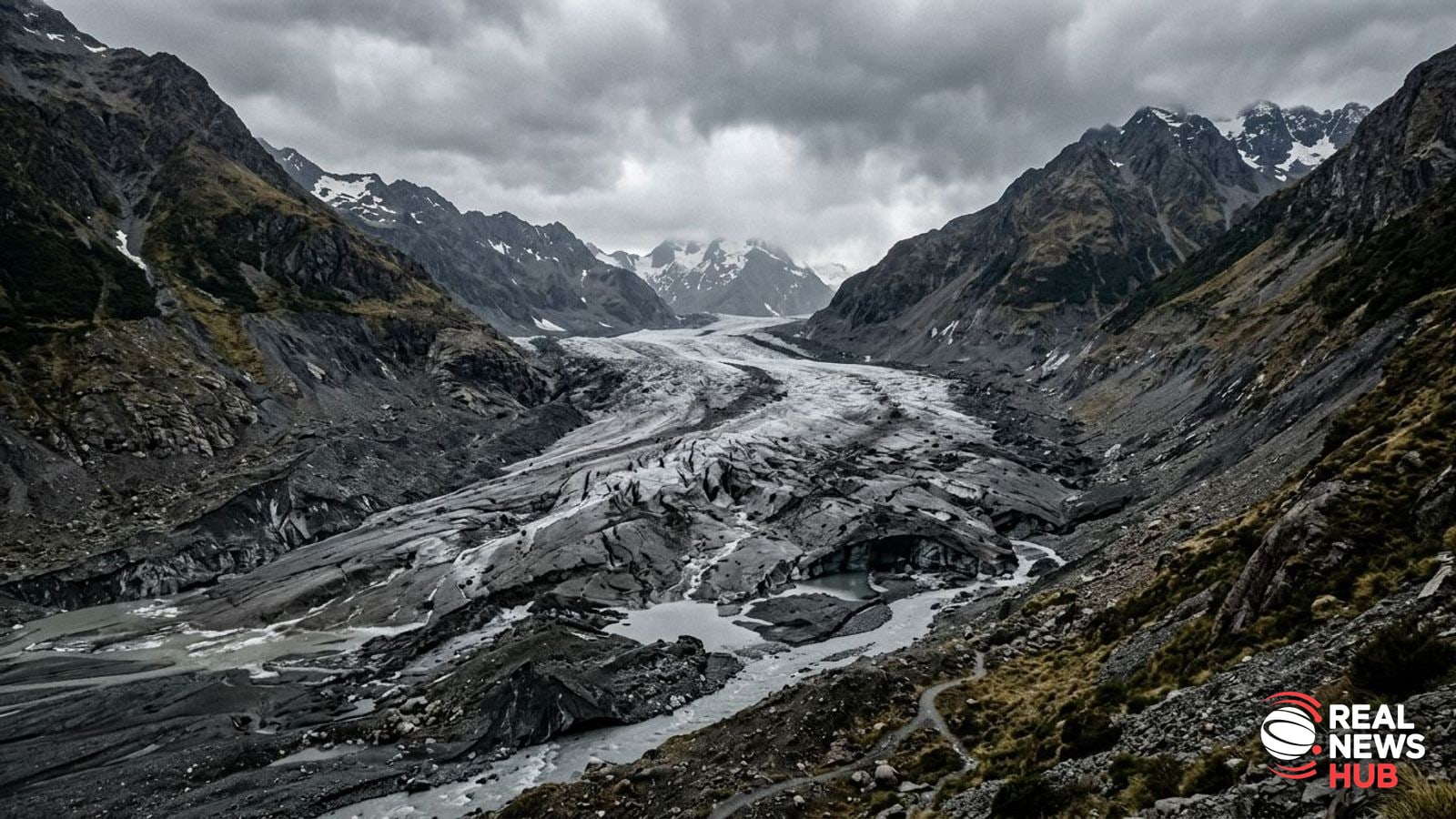
Atmospheric concentrations of greenhouse gases in New Zealand have reached all-time peaks, setting the stage for more severe heatwaves, destructive storms and widespread glacier loss, according to a government climate assessment.
The findings were published in the Our Atmosphere and Climate 2026 report, a joint review compiled every three years by Statistics New Zealand and the Ministry for Cities, Environment, Regions and Transport. The publication tracks environmental indicators across air, climate, freshwater, land and marine systems, warning that accelerating shifts in the climate present growing risks to human communities, infrastructure and biodiversity.
Monitoring data reveals that carbon dioxide levels in the country have climbed by 30 percent since tracking commenced in 1972, while methane concentrations marked an unprecedented peak in 2025. Over the historical record starting in 1909, New Zealand's mean yearly temperature has climbed by 1.36 degrees Celsius, with seven of the ten warmest years occurring during the past decade.
Officials noted that these higher baselines are already driving significant environmental disruptions. Chief science adviser Dr Alison Collins told The Guardian that multiple signs indicate warming is advancing, warning that even seemingly minor temperature increments trigger major consequences across the natural environment, business sectors and residential communities.
Glaciers across the nation are facing dramatic reductions. Out of approximately 3,000 glaciers across New Zealand, combined ice volume dropped from 56 cubic kilometres in 1997 down to 30 cubic kilometres in 2023. Projections outlined in the report show that even under a low-emissions model, between 14 percent and 86 percent of glacier volume is very likely to vanish by 2100. In a high-emissions future, total loss could reach between 69 percent and 100 percent.
Beyond melting ice, the report warned that land-based heatwaves will become longer, more frequent and more severe. Days exceeding 25 degrees Celsius are anticipated to increase by the middle of the century, raising vulnerability to physical illnesses and mental health burdens.
Marine ecosystems are experiencing substantial pressure as well. Ocean waters around New Zealand warmed 34 percent faster than the international average according to figures highlighted from 2025. These marine heatwaves have previously led to extensive sea sponge bleaching, kelp die-offs, penguin mortalities and major fish strandings.
The assessment also pointed to risks from intensified extreme weather events, including droughts hurting agriculture and intense cyclonic storms that endanger lives. The country previously experienced severe harm and billions in damages from Cyclone Gabrielle and major flooding in Auckland during 2023. Rising ocean levels threaten coastal housing and transport routes, while Indigenous Māori communities face lost access to culturally important territories as coastlines and habitats degrade.
Source & verification
DevelopingReported from Guardian World.
Get breaking news alerts and the Morning Briefing
Verified stories in your inbox, every one linked to its sources. All newsletters →