

Hawaii's iconic 550-year-old Hōlei Sea Arch collapses
The lava rock formation protruding from the rocky cliffs of Volcanoes National Park crumbled some time last weekend.
REALNEWS HUB Newsroom
Oct 3, 2026, 09:27 UTC
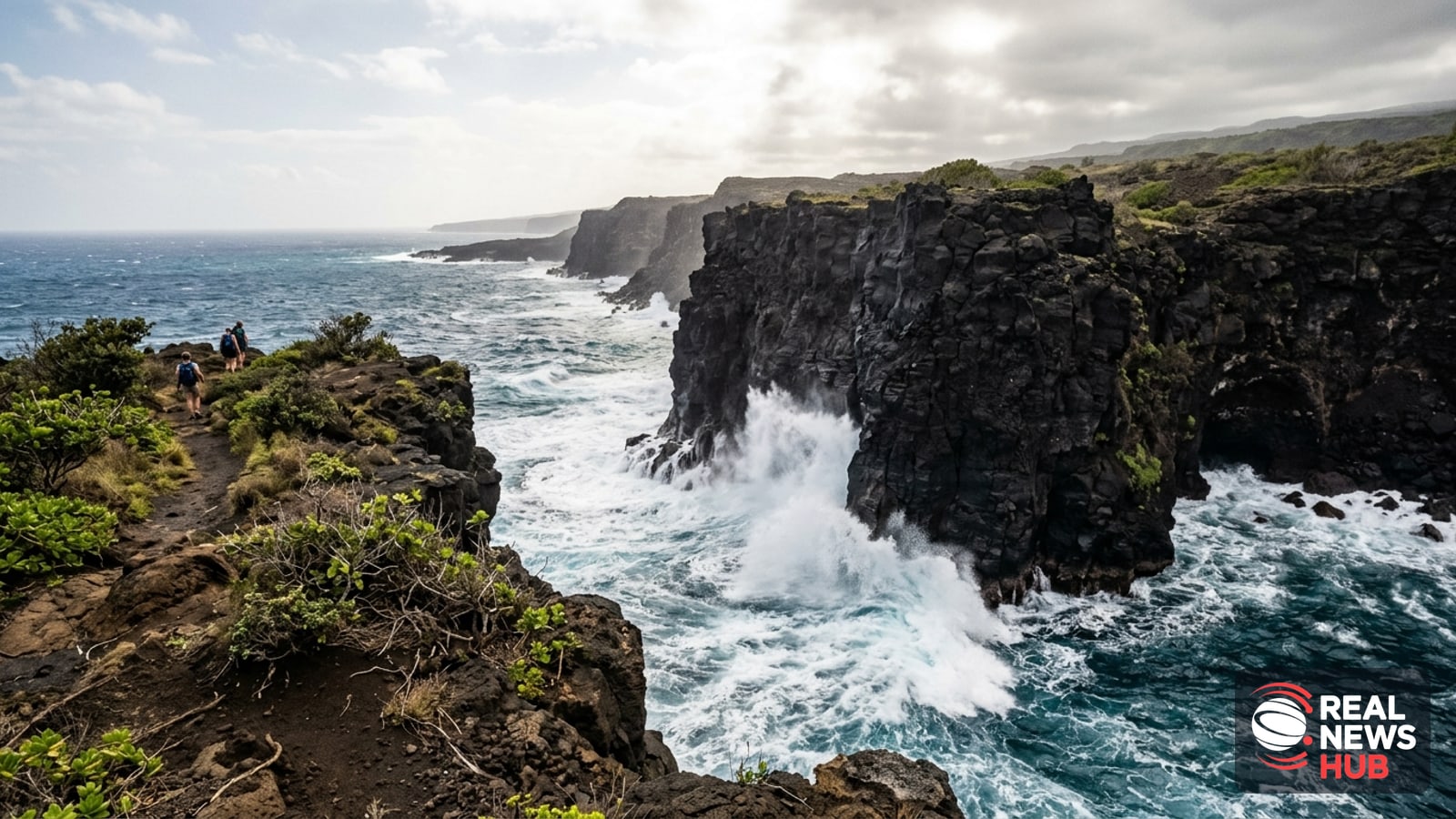
One of Hawaii's most recognizable natural landmarks, the Hōlei Sea Arch, has collapsed into the Pacific Ocean. The 90-foot-tall lava rock structure, located along the rugged southern coastline of Hawaii Volcanoes National Park on the Big Island, gave way after standing for roughly 550 years.
According to the National Park Service, the exact moment of the collapse remains undetermined. Park officials noted that the geological feature was still intact on September 23, but it had completely vanished into the waters below by September 27. The structure is suspected to have fallen while the park was temporarily shut down due to the passage of Tropical Storm Nolo.
Situated at the terminus of Chain of Craters Road, the dramatic formation had long served as a prominent attraction for park visitors and photographers. Its demise reflects the continuous, dynamic processes shaping the island's shoreline, which officials described as the latest transformation of the park's isolated and wave-swept perimeter.
The vulnerability of the sea arch had been documented for several years. Park officials previously cautioned the public in 2021 that the structure's eventual demise was inevitable due to surrounding instability. Seismic activity linked to the major 2018 eruption and summit collapse of the nearby Kīlauea volcano had previously fractured the surrounding cliff faces, weakening the geological foundation supporting the arch.
Environmental pressures continued to compromise the site in subsequent years. Emerging fissures prompted authorities to shutter the original visitor viewing platform in early 2020. Months afterward, officials established a replacement overlook stationed at a more secure distance from the cliff edge. Heavy storm surf later in 2020 detached a large section of rock from the base of the span.
Park authorities previously emphasized that geological arches of this type are naturally fleeting, noting in earlier warnings that while this landmark would ultimately fall into the ocean, ongoing coastal erosion and inland cliff migration would eventually carve out new natural formations to take its place.
Following the announcement, members of the public took to social media to reflect on the landmark's loss, sharing photographs and recollections from previous visits to the scenic coastal site.
Source & verification
VerifiedReported from Science.
Get breaking news alerts and the Morning Briefing
Verified stories in your inbox, every one linked to its sources. All newsletters →