

Nobel Prize awarded for showing how nerve cells shape feelings
US psychiatrist and neurologist Karl Deisseroth and his German colleagues Peter Hegemann and Georg Nagel have been awarded for their work.
REALNEWS HUB Newsroom
Oct 5, 2026, 11:03 UTC
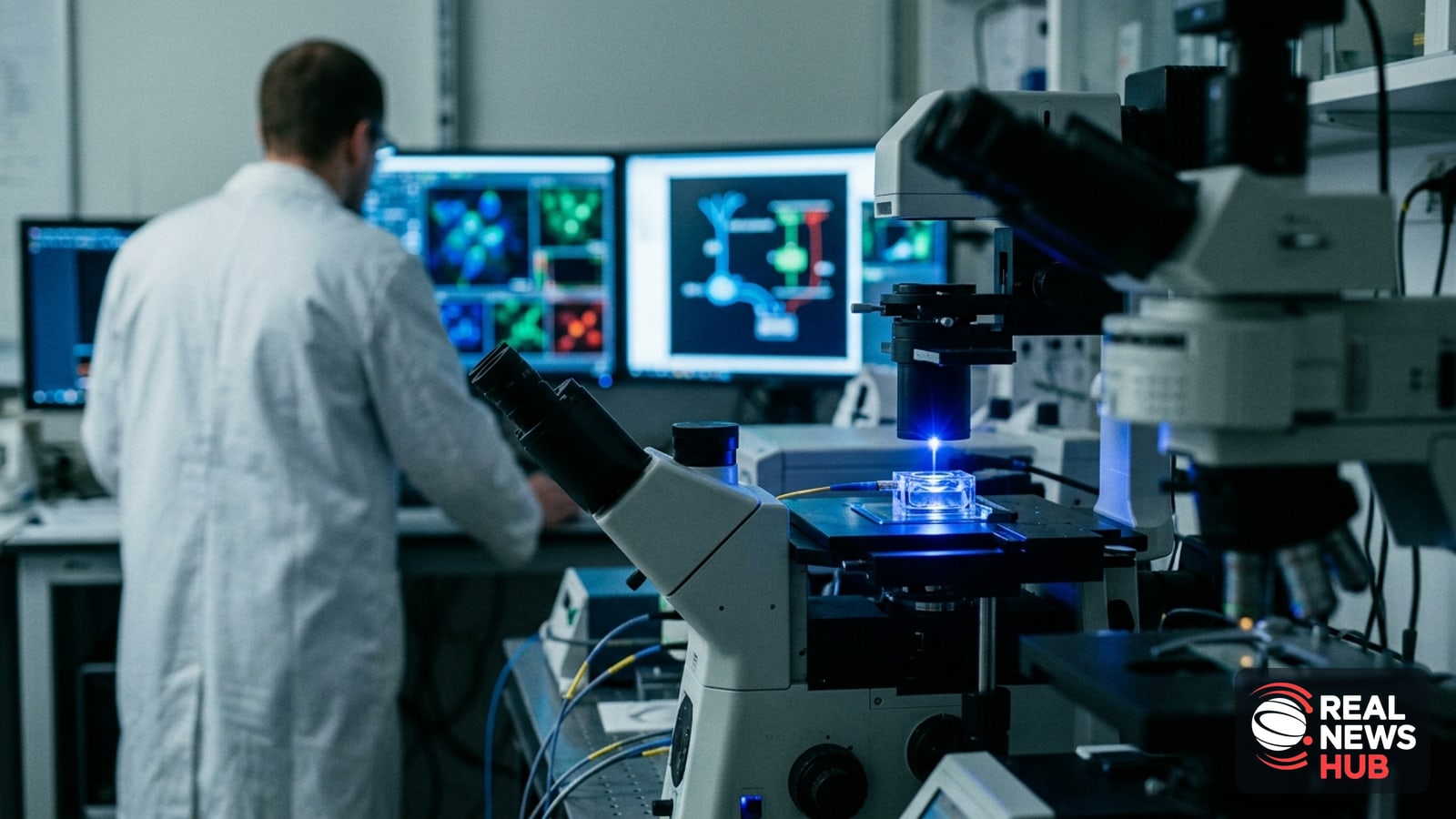
The 2026 Nobel Prize in Physiology or Medicine has been awarded to American psychiatrist and neurologist Karl Deisseroth alongside German researchers Peter Hegemann and Georg Nagel for pioneering the field of optogenetics. Their groundbreaking research has enabled scientists to control and monitor nerve cells, fundamentally transforming modern understanding of the brain.
Announcing the award, the Nobel Committee commended the three scientists for establishing the groundwork for a new chapter in neuroscience. Their scientific breakthroughs have allowed researchers to map and examine the specific neural pathways that dictate actions, memories, and emotions, providing crucial insights into both psychiatric and neurological illnesses.
Optogenetics works by using light to manipulate the electrical firing of brain cells. The technology relies on a light-sensitive algal protein known as channelrhodopsin, which was discovered by Hegemann and Nagel during the early 2000s. By incorporating this specialized protein into cellular networks, scientists gained the unprecedented ability to illuminate, monitor, and influence the activity of targeted neurons.
Per Svenningsson, who chairs the Nobel Committee for Physiology or Medicine, emphasized that optogenetics has unlocked brain-mapping possibilities that researchers previously could only imagine. Prior to their discoveries, tracing the exact biological pathways underpinning human emotion, physical processes, and complex behaviors remained a profound scientific obstacle.
Beyond expanding fundamental knowledge of brain function, optogenetics has spurred promising practical applications in medicine. Clinical researchers are currently applying the methodology in therapeutic trials aimed at regaining vision for individuals suffering from severe visual impairments.
The Nobel Assembly highlighted the sweeping influence of the technique, stating that it has fundamentally reshaped brain science and continues to deliver daily breakthroughs toward unraveling how the mind operates.
Reacting to the announcement, the laureates described receiving the accolade as an absolute honor and expressed their joy at celebrating the achievement with close colleagues. Along with the prestigious recognition, the three winners will divide the prize fund of 12 million Swedish kronor, roughly equivalent to 900,000 British pounds.
Source & verification
VerifiedReported from BBC News.
Get breaking news alerts and the Morning Briefing
Verified stories in your inbox, every one linked to its sources. All newsletters →