

South African white genocide does not exist, new ambassador to US tells BBC
Roelf Meyer tells the BBC that being a white Afrikaner gives him legitimacy to challenge Trump's claim of a genocide.
REALNEWS HUB Newsroom
Sep 26, 2026, 07:18 UTC
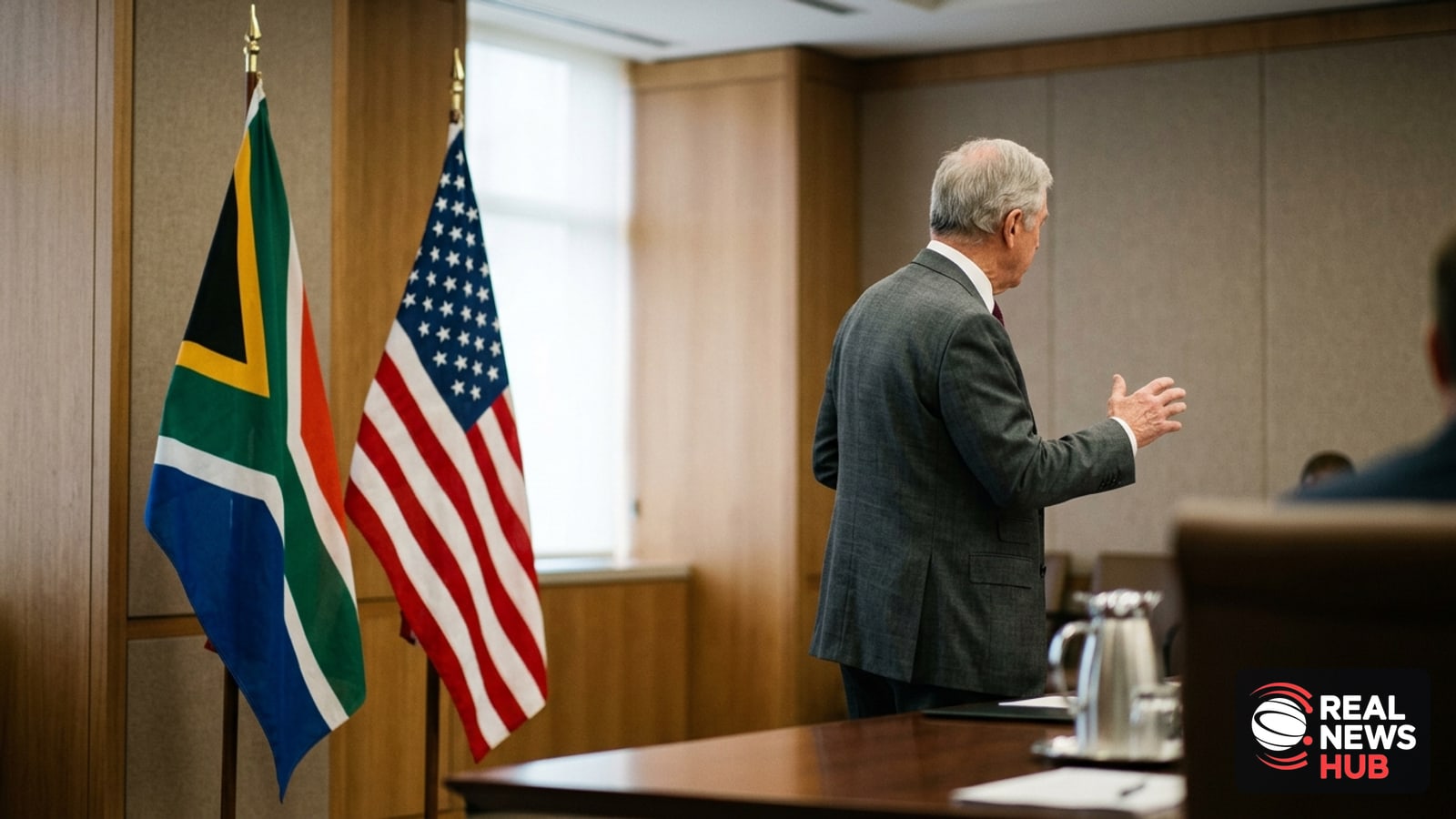
South Africa's newly appointed ambassador to Washington, Roelf Meyer, has rejected claims made by US President Donald Trump that white Afrikaners are facing genocide in their home country, telling the BBC his own background as an Afrikaner gives him standing to dispute the assertion.
Meyer, who was one of the key negotiators who helped dismantle apartheid in the 1990s, said he recalled questioning whether Trump's remarks were even directed at people like him when he first heard them. He described the idea of a coordinated campaign of violence against the white minority as unfounded, and said he had never received a straight answer about the origin of what he called a distortion of the facts.
He took up his post in Washington in April, following a sharp deterioration in relations between Pretoria and Washington. Tensions escalated last year when Trump raised the genocide claim directly with South African President Cyril Ramaphosa during a White House meeting, and subsequently opened a refugee pathway specifically for Afrikaners.
According to the BBC, close to 13,000 refugees have been resettled in the United States under that program since it began, with all but a handful coming from South Africa. The Trump administration has signaled plans to admit as many as 17,500 more white Afrikaners over the coming year, based on a notice sent to Congress this week.
A White House spokeswoman defended the policy in a statement to the BBC, saying Trump had offered relief to Afrikaners facing violence and land loss, and accused the South African government and much of the media of dismissing the community's experiences.
Some Afrikaners who have taken part in the resettlement program describe ongoing fear over farm security, even in cases where they were not personally harmed. Others active in seeking asylum, including a member of the right-wing Freedom Front Plus party, have alleged a deliberate effort to target white farmers.
Meyer, however, pointed to data showing that the overwhelming majority of crime victims in South Africa, including on farms, are Black South Africans. He argued that violence in the country's townships is a far larger concern in proportional terms than attacks on farms, and stressed that claims of a genocide have been rejected across the political spectrum, including by parties representing Afrikaners themselves.
Meyer, who negotiated on behalf of the National Party that once enforced apartheid, worked alongside Ramaphosa during that era and said the trust built between them was a factor in his selection as ambassador, along with the fact that his Afrikaner identity could carry weight in Washington. He added, though, that his role extends beyond representing that single community.
Critics of the refugee program have also emerged from within Afrikaner circles. A Johannesburg pastor told the BBC he believes the sentiment driving some Afrikaners' grievances stems less from persecution and more from a loss of the social and economic advantages they once held, comparing it to having to share a resource that used to be theirs alone.
A former official who ran the US refugee assistance effort suggested extending the program to Afrikaners might be improperly using resources intended for people fleeing war or ethnic cleansing.
The Trump administration has also cited other disputes with Pretoria, including employment equity targets for companies and a law permitting land expropriation without compensation under limited circumstances, both aimed at addressing inequalities left by apartheid.
Meyer said he wants the executive order underpinning the refugee program lifted, arguing South Africa has addressed the concerns raised by Washington and never restricted anyone's ability to leave the country. He said he would welcome US assistance in tackling crime more broadly, including through equipment to improve police response times, and urged Afrikaner activists demonstrating abroad to instead focus on addressing the issue within South Africa itself.
Source & verification
DevelopingReported from World News.