

Explained
Why is fighting escalating between Yemen's Houthis and Saudi Arabia?
A breakdown of a years-long truce has triggered intense clashes in Yemen and renewed Houthi missile and drone assaults against Saudi Arabian infrastructure. The escalation has claimed hundreds of lives, damaged office property in Riyadh, and disrupted regional transport.

Watch: Explained in 3 minutes
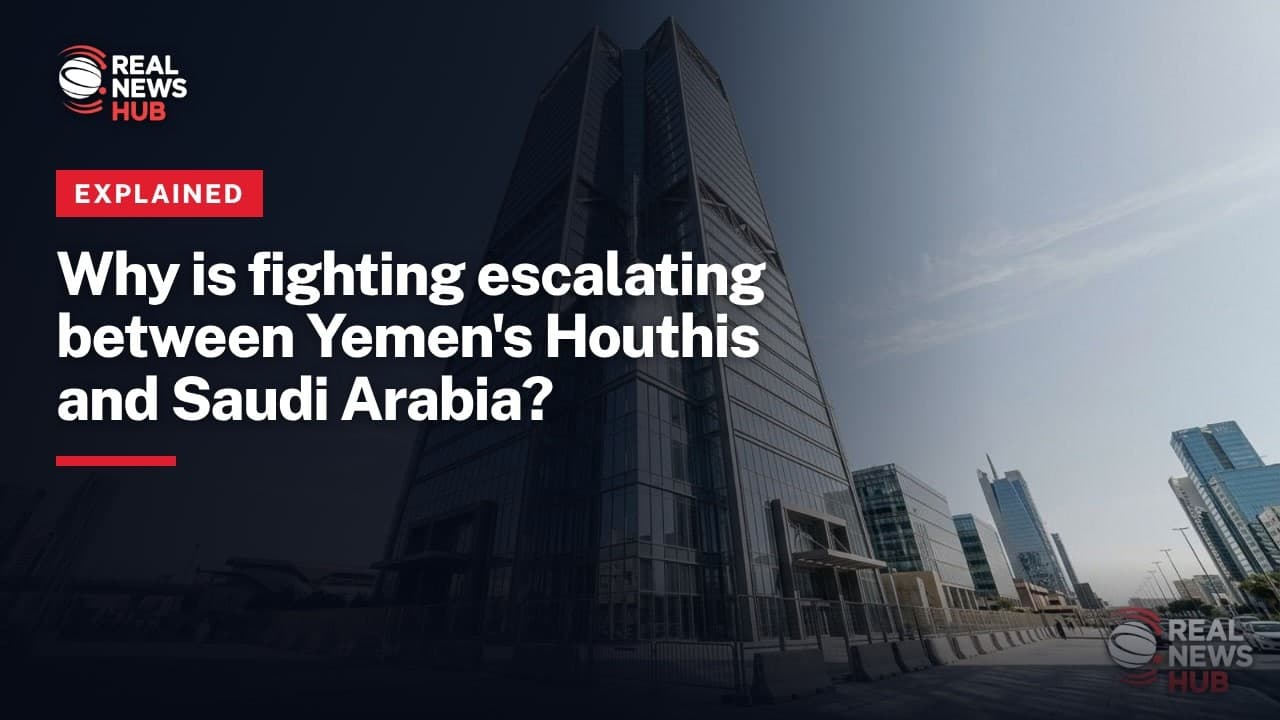
The REALNEWS HUB Explained video · Watch on YouTube
Key facts
- A fragile UN-mediated ceasefire in place since 2022 has collapsed amid renewed fighting that began in July.
- Houthi forces have launched ballistic and cruise missiles and drones at Riyadh and key Saudi energy and transport sites.
- Air defences intercepted missiles over Riyadh, though falling debris damaged an office high-rise used by Saudi Aramco.
- Ground combat has intensified in contested Yemeni regions like Taiz, where government forces launched Operation Dawn of Yemen.
- United Nations figures show the renewed violence has killed over 1,600 people and displaced more than 300,000.
Why has the conflict erupted again?
The conflict between Yemen's Houthi movement and the Saudi-led military coalition has experienced a sharp resurgence following the breakdown of a United Nations-brokered truce that had largely held since 2022. Hostilities flared again in July, ending a prolonged period of relative quiet in a war that has lasted over a decade.
Tensions escalated after Saudi forces struck the airport in Sanaa to prevent an Iranian flight from touching down. Houthi forces responded by attacking Abha airport inside Saudi Arabia and targeting Saudi ships traveling across Red Sea shipping lanes. Regional turmoil intensified further after American and Israeli strikes on Iran earlier in the year, turning Yemen into an active front within wider Middle Eastern friction.
What targets have been struck in Saudi Arabia?
The Saudi-led coalition has intercepted repeated barrages fired toward Saudi population centres and economic hubs. On Sunday, air defences brought down two ballistic missiles and two cruise missiles aimed at Riyadh and the kingdom's south, as well as another projectile targeting the Eastern Region. Falling debris from an aerial interception shattered windows and damaged the Aramco Tower in Riyadh's King Abdullah Financial District, though no casualties were reported and oil operations continued uninterrupted.
Houthi military representative Yahya Saree claimed the group carried out coordinated operations using missiles and drones against civil and energy sites. Targets cited included Khalid International Airport, an Aramco pipeline pumping installation at Dawadmi, and oil facilities in Riyadh and Khurais, alongside coalition military formations in Najran, Al-Jawf, and Ma’rib.
What is happening on the ground inside Yemen?
Internal fighting between Houthi rebels and troops aligned with Yemen's internationally backed administration has intensified alongside cross-border fire. On October 5, Yemeni government forces initiated Operation Dawn of Yemen to reclaim territory, making tactical advances across multiple villages and strategic areas in Taiz province.
Despite government gains, Houthi forces continue to encircle the provincial capital of Taiz. The confrontation has taken a severe civilian toll. An attack on the al-Hadara market in Taiz left approximately 30 civilians dead, with both factions trading blame over whether it was caused by a coalition air raid or a Houthi missile. In addition, Houthi officials reported that coalition strikes killed at least 25 people in al-Shariyah and at least 33 near Sanaa.
How is the crisis affecting civilians and the region?
Data from the United Nations shows that the renewed fighting has resulted in more than 1,600 deaths and forced over 300,000 people from their homes. In Taiz, where hundreds of thousands of civilians remain under siege, severe shortages of food and essential medical supplies have developed.
The conflict has also disrupted regional transit. UAE-based airlines have suspended routes and modified flight paths toward Saudi Arabia and regional hubs because of security dangers near the Strait of Hormuz. At sea, the US military disabled an immobilized freighter in the Gulf of Oman as part of efforts against Iranian transit corridors, prompting an emergency rescue of 22 crew members by the UAE National Guard.
Timeline
- 2015Saudi-led coalition begins military intervention to restore Yemen's internationally recognized administration after Houthis seize Sanaa.
- 2022United Nations mediates a ceasefire that largely suspends broad combat.
- July 2026Conflict reignites between Houthi forces and the Saudi-led coalition.
- Oct 5, 2026Yemeni government forces initiate Operation Dawn of Yemen to retake land in Taiz.
- Nov 7, 2026Fatal market explosion in Taiz kills roughly 30 people as rival sides trade blame; strikes on al-Shariyah leave at least 25 dead.
- Nov 8, 2026Saudi air defences shoot down missiles over Riyadh, with falling debris causing damage to the Aramco Tower.
What happens next?
Saudi officials have launched an inquiry into reported civilian deaths from coalition airstrikes near Sanaa, while Houthi leadership has vowed further retaliatory strikes against Saudi Arabia. In regional diplomacy, Saudi and Qatari officials have opened telephone contacts to evaluate developments and search for ways to stabilise the area.
This explainer was written with AI assistance from REALNEWS HUB's own reporting listed below, and reviewed before publication. How we use AI
Spotted an error? Report it · Editorial standards · Corrections policy
Sources on REALNEWS HUB
- Riyadh Aramco office damaged by falling debris after missile interception · Nov 8, 2026 · via South China Morning Post
- Saudi air defences down Houthi missiles targeting Riyadh · Nov 8, 2026 · via The National (UAE)
- UAE evacuates cargo ship crew amid rising maritime standoff near Iran · Nov 8, 2026 · via Gulf News
- Yemen airstrikes kill at least 25 people in Houthi-held town · Nov 7, 2026 · via World News
- Yemen government and Houthis trade accusations over fatal Taiz market blast · Nov 7, 2026 · via Aljazeera English