

Pentagon says it has formally completed withdrawal of US troops from Iraq
Announcement comes two years after withdrawal was agreed to and 12 years since US mission to fight IS began The Pentagon announced on Wednesday that it has formally completed its withdrawal of US troops from Iraq, two years after the withdrawal was agreed to and 12 years since the US mission to fight the Islamic State started. After the announcement, Iran and its allies celebrated the departure as a victory, while Iraqi security experts worry that the withdrawal could give the Islamic State and others a chance to recover. Continue reading...
REALNEWS HUB Newsroom
Sep 30, 2026, 15:15 UTC
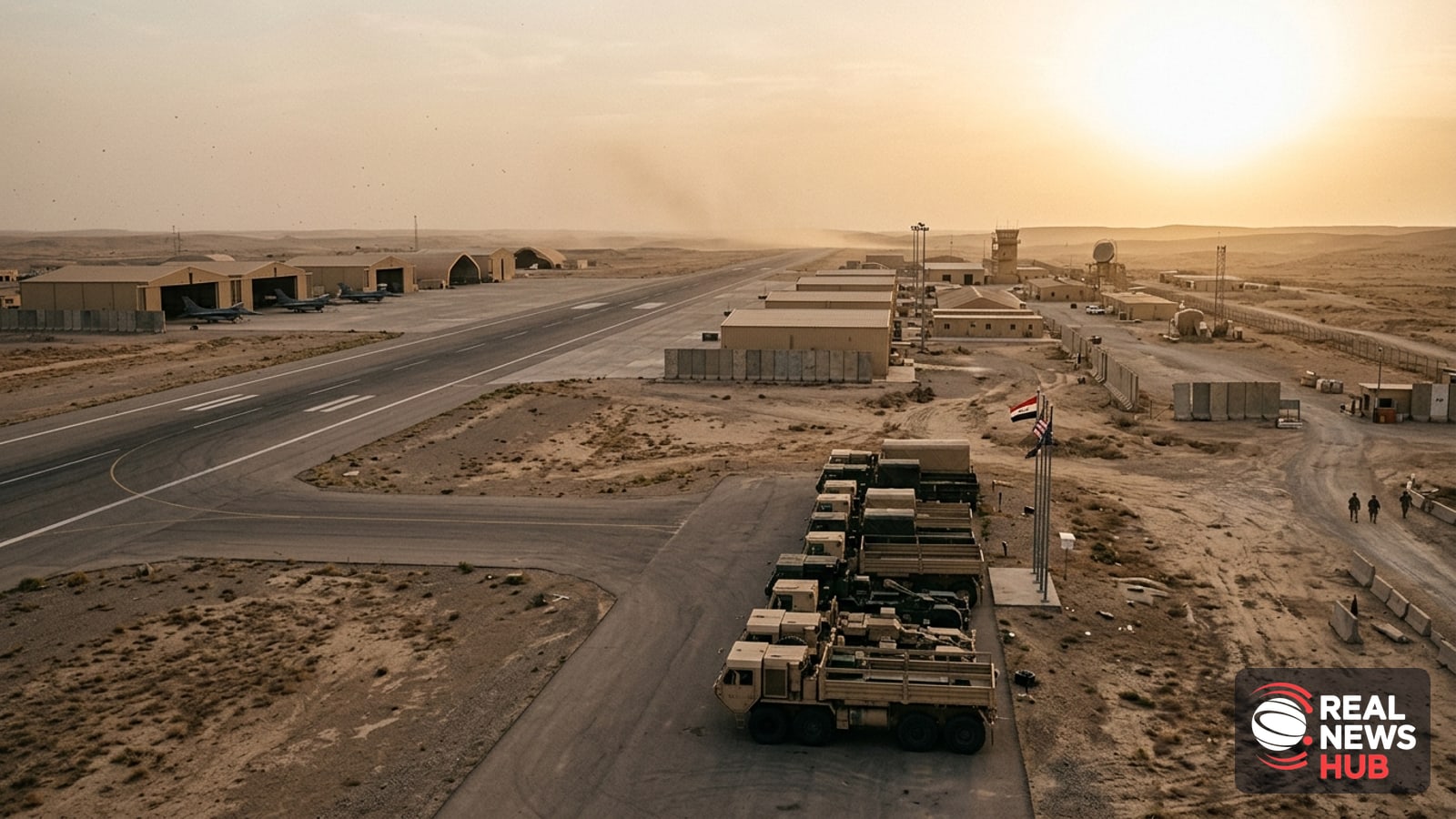
The United States military has officially concluded the exit of its forces from Iraq, the Department of Defense confirmed on Wednesday. The final drawdown follows a bilateral agreement reached two years ago and brings an end to an international military campaign that was initiated twelve years ago to counter the Islamic State group.
The completion of the pullout was marked in Baghdad with parades by Iraqi security personnel celebrating the departure of American and coalition units. Reaction across the region was swift, with Iranian authorities and their regional partners portraying the conclusion of the American presence as a major triumph. Conversely, security analysts in Iraq voiced apprehension that a potential void could afford remnants of militant factions room to regroup.
In an official release, defense officials stated that the multinational effort known as Operation Inherent Resolve has concluded in Iraq, describing the exit as the triumphant close of the military campaign responsible for defeating the extremist group. The Defense Department confirmed that American personnel would maintain intelligence sharing and instructional assistance to prevent any potential resurgence by militants. Officials emphasized that handling enduring internal security threats, which include leftover insurgent cells and Iran-supported armed factions, is now entirely the responsibility of Iraqi authorities.
The initial American incursion into Iraq occurred in 2003, removing long-standing ruler Saddam Hussein after nearly a quarter-century in control. The subsequent period saw widespread sectarian strife, the loss of hundreds of thousands of civilian lives, and the eventual formation of the Islamic State. Although American forces initially exited the country under President Barack Obama in late 2011, when combat deaths had reached roughly 4,400, military units were deployed again in 2014 after the extremist group overran key northern regions including Mosul.
Following that intervention, a coalition numbering over 80 nations pushed the militant organization out of its Iraqi strongholds by 2017 and from Syrian areas by 2019. In 2024, under the administration of President Joe Biden, Washington and Baghdad established the framework to bring coalition field operations to a definitive close.
Despite the official milestone, observers remain divided over the readiness of local forces. Speaking to Reuters, security adviser Jassim al-Bahadli warned that leaving gaps in territorial protection can present severe risks. Retired general Mohammed al-Juburi also emphasized to Reuters that national stability hinges on whether the Iraqi government has enacted a viable strategy for handling defense without direct coalition ground involvement.
Source & verification
VerifiedReported from Guardian US Politics.
Get breaking news alerts and the Morning Briefing
Verified stories in your inbox, every one linked to its sources. All newsletters →