

Swiss glaciers suffer 'disastrous' year of ice loss, threatening water supplies
Scientists say such rapid melting is no longer surprising given the pace of climate change.
REALNEWS HUB Newsroom
Oct 1, 2026, 03:15 UTC
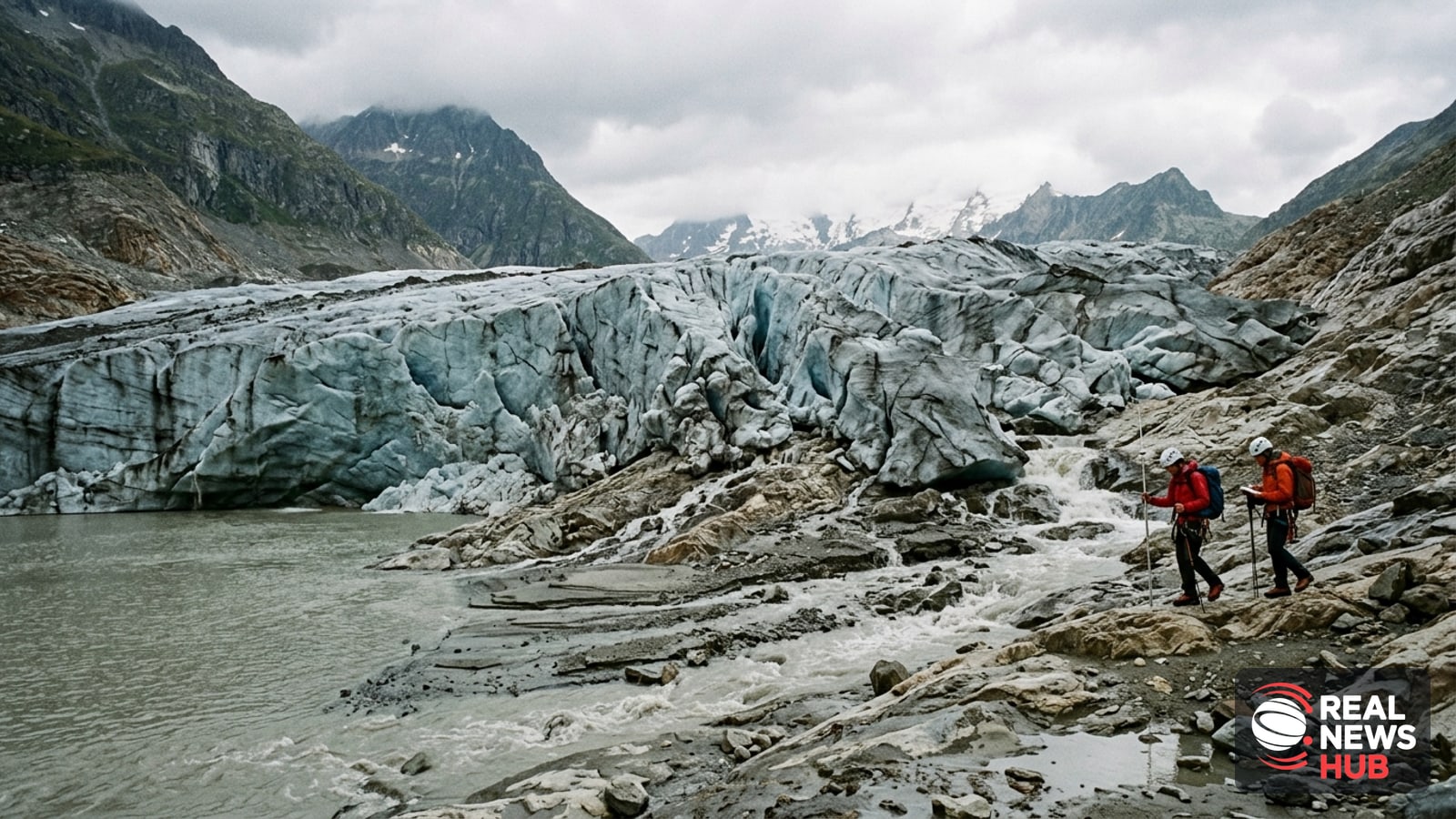
Glaciers across Switzerland experienced a catastrophic reduction in volume over the past 12 months, losing an estimated 5.5% of their total remaining ice, according to a new report from Glacier Monitoring Switzerland. The severe loss, fueled by intense summer heatwaves and inadequate winter snowfall, marks one of the most drastic declines ever recorded in the Alps.
Scientists noted that Alpine glaciologists previously viewed a 2% annual drop as an extreme anomaly. The current decline surpasses those historic thresholds, raising urgent alarms regarding future water availability for regional agricultural irrigation, hydroelectric generation, and commercial river shipping.
Dr. Matthias Huss, who heads Glacier Monitoring Switzerland, described the outcome as "really just disastrous." Researchers noted that glaciers entered the warm season in an already compromised state following a mild winter with limited snowfall. Subsequent heatwaves in May and June swiftly cleared the protective snow cover, leaving dark bare ice exposed to absorb solar radiation and accelerate further melting through the late summer months.
The consequences of retreating ice extend beyond immediate volume loss. Scientists warn that melting can undermine high-altitude rock formations, increasing the likelihood of dangerous rockslides and catastrophic flash floods, similar to a deadly collapse documented in Nepal earlier this year. Furthermore, smaller glaciers will progressively lose the capacity to replenish regional waterways during hot and dry periods.
Between July and September alone, melting Swiss glaciers released roughly 2.2 trillion liters of water into downstream rivers. While this influx provided temporary relief during summer dry spells, experts caution that it represents an unsustainable drawdown of long-accumulated reserves. Low water levels along key transport corridors like the River Rhine have already disrupted cargo transit and pushed up shipping expenses.
Field measurements also revealed alarming signs of degradation at the highest elevations. Even at altitudes exceeding 3,500 meters, where freezing conditions typically preserve winter precipitation, observers found bare ice rather than enduring snowfields. Without surviving seasonal snow to compact into new glacier mass, these frozen systems cannot replenish the heavy losses occurring further down the mountainsides.
University of Bristol glaciologist Dr. Fabien Maussion, who was not involved in the Swiss assessment, pointed out that while such dramatic degradation is distressing, it aligns directly with projected impacts from human-driven global heating. Some smaller Alpine sites, including the Plattalva glacier in the eastern part of the country, have already vanished entirely.
Despite the bleak outlook for many Alpine formations, researchers emphasized that substantial reductions in greenhouse gas emissions remain essential to preserve massive ice reserves elsewhere, particularly across polar territories and the Himalayas. Protecting these larger reservoirs will prove critical to preventing catastrophic sea-level rise for coastal communities worldwide.
Source & verification
DevelopingReported from Science.
Get breaking news alerts and the Morning Briefing
Verified stories in your inbox, every one linked to its sources. All newsletters →