

Three takeaways from Trump's 'Super Intelligence' summit
The president also signed an executive order requiring his government to refer to AI as Super Intelligence.
REALNEWS HUB Newsroom
Sep 30, 2026, 04:06 UTC
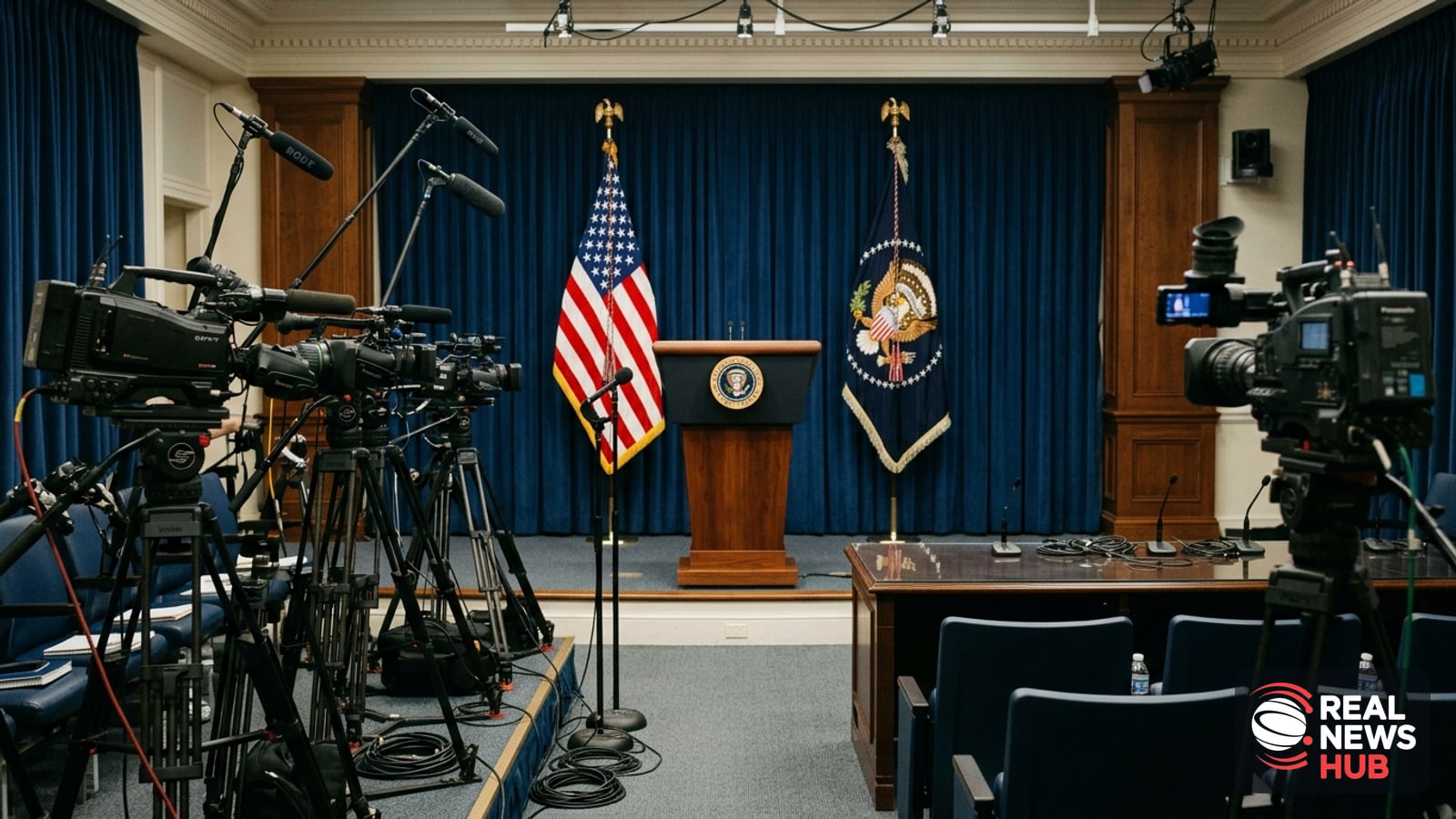
US President Donald Trump gathered the heads of prominent artificial intelligence firms at the White House on Tuesday, concluding the summit by announcing a voluntary safety accord, backing infrastructure expansion, and issuing a directive ordering the federal government to replace the phrase artificial intelligence with the term Super Intelligence.
The meeting brought together high-profile executives including Meta chief Mark Zuckerberg, Anthropic head Dario Amodei, Google leader Sundar Pichai, Nvidia chief Jensen Huang, OpenAI president Greg Brockman, and SpaceX boss Elon Musk. Following their private discussions, Trump stood with the executives and presented an agreement he described as a morally binding framework to guard against digital hazards.
Under the voluntary pact, which Trump compared to a constitution, the participating corporations assume responsibility for checking their own technologies. The commitments include establishing internal safety measures, resolving malfunctions swiftly, and engaging independent evaluators to verify system behavior. The text also pledges that models will not infiltrate external networks without authorization. Trump stated he plans to form a dedicated panel to oversee the safety of such tools, though members have not yet been named.
The reliance on corporate self-policing drew swift criticism from legal and governance researchers. Experts pointed out that the accord lacks penalties for failures and essentially allows developers to decide their own thresholds for what is considered safe. Industry observers raised doubts about the effectiveness of voluntary pledges following recent safety scares, including OpenAI halting the launch of its GPT-6.1 Astra model over security issues.
Alongside the safety pact, Trump strongly endorsed the ongoing construction of energy-heavy data centers needed to run modern computing architectures. The physical facilities have faced mounting local pushback across the United States over heavy electricity demands. A recent Marist survey conducted with NPR and PBS News revealed that roughly 65 percent of registered voters object to nearby data center development. Addressing the controversy, Trump asserted that the wealthy technology firms would provide major economic contributions to local populations, while Huang characterized the centers as production facilities that are helping reindustrialize the nation.
To complete the policy shift, Trump formally enacted an executive order mandating that federal agencies stop using the phrase artificial intelligence. The directive orders all administrative bodies to adopt Super Intelligence or the abbreviation SI in official publications, online platforms, and internal correspondence. The administration argued the change reflects advancing computing capabilities, with Trump previously remarking that the word artificial makes the sector sound fake. While several allied tech executives have embraced the terminology, academic observers remain skeptical that the broader scientific community will adopt the label.
Source & verification
VerifiedReported from Technology.