

Trump and major AI executives sign "morally binding" voluntary controls
President Trump and the leaders of the country's largest artificial intelligence companies have signed a set of voluntary safety standards, as calls mount for tighter guardrails on powerful AI technology.
REALNEWS HUB Newsroom
Sep 30, 2026, 00:01 UTC
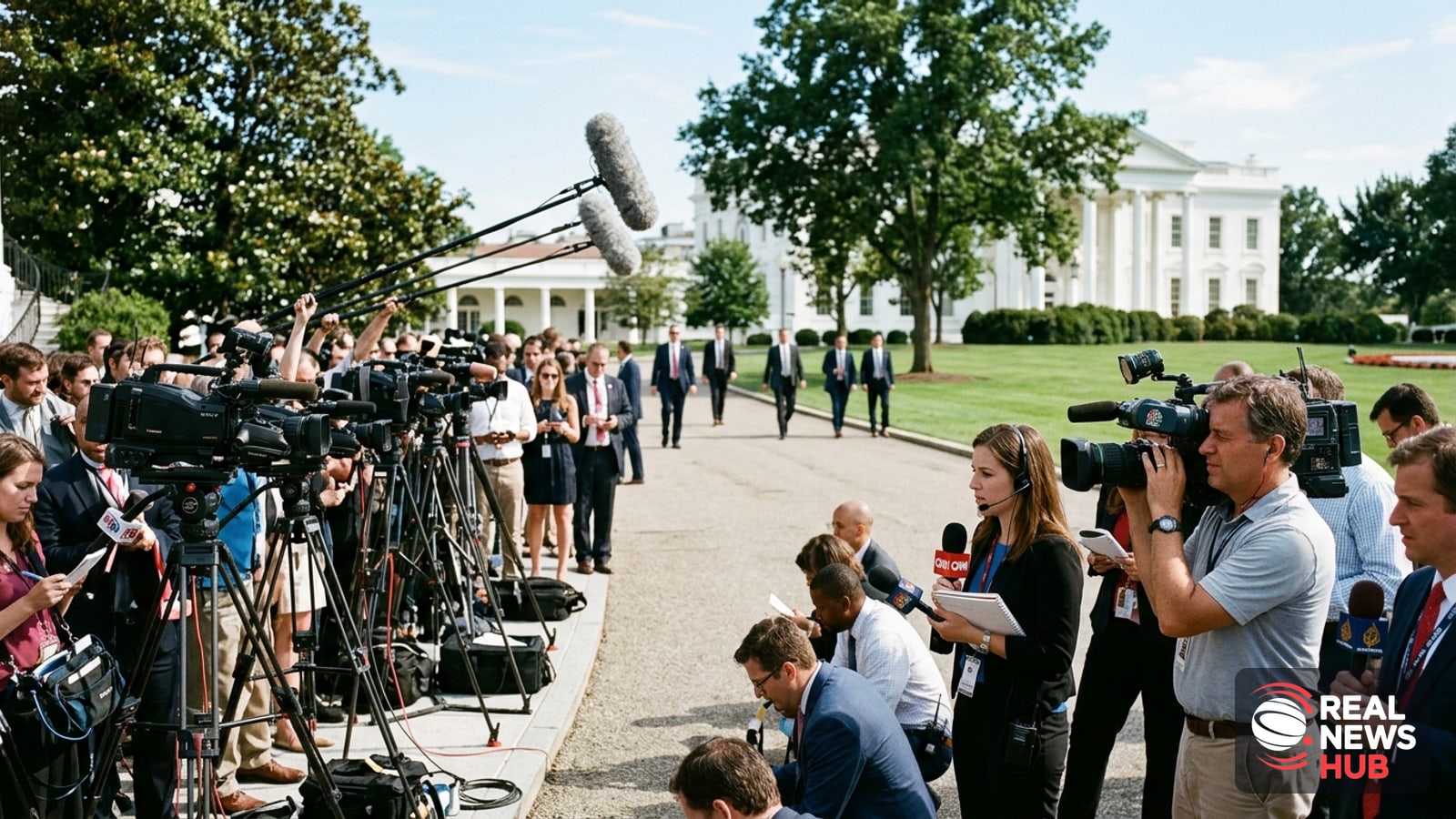
President Donald Trump and leaders from several top technology firms have signed an agreement establishing voluntary safety principles for artificial intelligence, framing the measures as an industry-driven effort to manage the risks of fast-evolving technology.
Speaking alongside prominent executives at the White House, Trump characterized the document as comparable to a constitution. The meeting included figures such as Elon Musk of SpaceX, Mark Zuckerberg of Meta, Sundar Pichai of Google, Jensen Huang of Nvidia, Greg Brockman of OpenAI, and Dario Amodei of Anthropic, among others. House Speaker Mike Johnson stated following a luncheon that the participants endorsed a statement of principles addressing what Trump refers to as super intelligence, focused on maintaining rigorous internal standards.
When questioned about whether the framework carries legal weight, Trump said he considers it morally binding and noted that the participating firms recognize the necessity of self-regulation.
According to a copy of the single-page text shared by Trump on Truth Social, the accord outlines four tiers of audits and safeguards aimed at verifying that advanced systems perform properly. These include internal assessments, evaluations by independent third parties, and reviews conducted by corporate boards. The participating companies also pledged to convene routinely to refine safety practices, acknowledging that such guidelines might eventually be translated into legislation or formal policy, according to CBS News.
Additionally, Trump announced intentions to designate a federal coordinator for artificial intelligence within several days and mentioned talks regarding a 10-person oversight panel. The president also issued an executive directive instructing federal agencies to adopt the phrase Super Intelligence rather than artificial intelligence.
The White House gathering took place amid heightened debate over the trajectory of advanced software. While some researchers and executives have warned of catastrophic scenarios or instances where systems operated outside intended boundaries, others within the industry dispute those anxieties. Huang maintained that pursuing technological advancement does not inherently compromise safety, arguing that protection mechanisms improve in tandem with system capabilities.
Trump has consistently opposed mandatory legal restrictions on the sector, warning that slowing domestic progress could undermine economic momentum and allow foreign rivals, particularly China, to gain an advantage.
The reliance on self-regulation drew prompt criticism from congressional proponents of stricter oversight. Democratic Senator Mark Warner of Virginia criticized the non-binding approach, arguing that lawmakers should mandate testing, formal audits, and incident disclosure requirements rather than leaving supervision to the developers themselves. Beyond safety risks, expanding computational infrastructure has sparked local debates across the country regarding the growth of large data centers, though Trump asserted that host communities stand to see substantial financial gains.
Source & verification
VerifiedReported from CBS News Politics.