

Middle East conflict prompts widespread flight cancellations and crude price spike

Watch this story
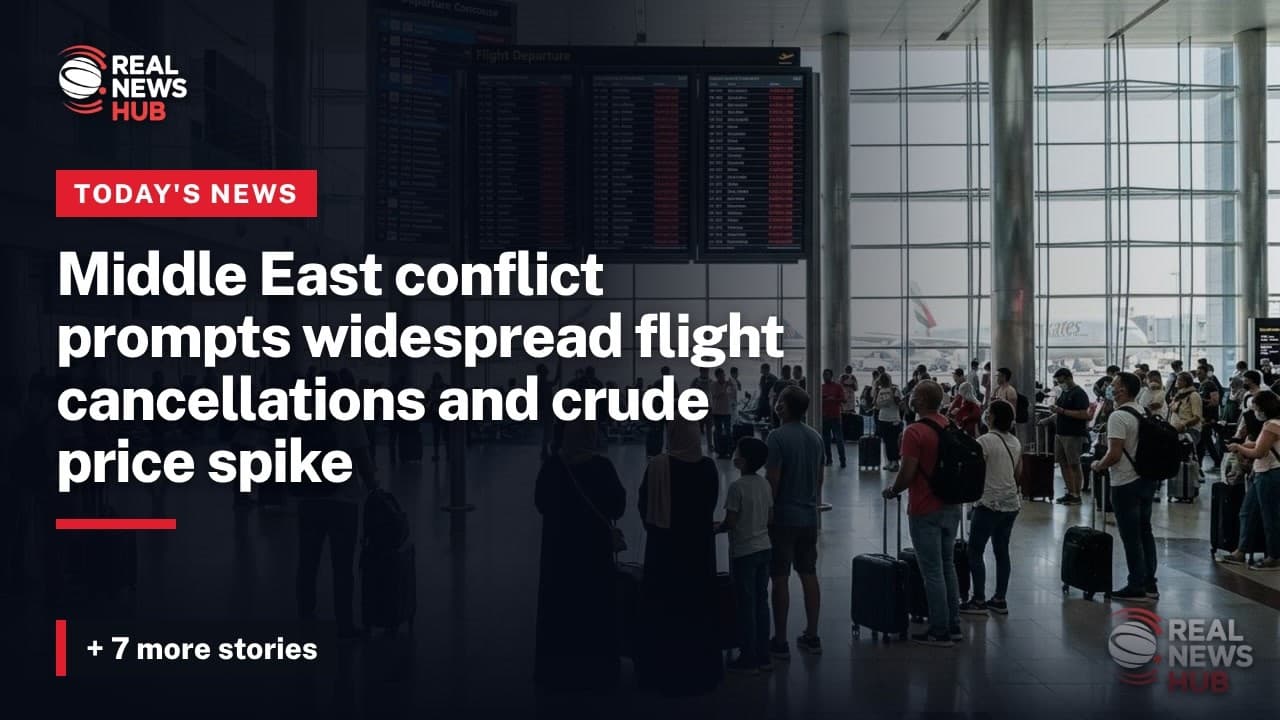
From Middle East Flights Halted as Crude Surges + Alberta Rejects Secession, starting at 0:31 · Watch on YouTube
The ongoing conflict involving the United States, Israel and Iran is driving widespread air travel cancellations across the Middle East and pushing international oil prices sharply higher. Airlines based in the United Arab Emirates and across South Asia have halted multiple routes into Saudi Arabia, while a maritime standoff continues to restrict commercial traffic near the Strait of Hormuz.
Regional aviation has faced mounting disruption as the main airport in Riyadh remains suspended. UAE flag carriers Etihad, Emirates and flydubai have called off flights serving Riyadh, Jeddah and Dammam through Oct. 24, though flydubai continues to run trips between Dubai and Medina. Indian carriers Air India, Air India Express and IndiGo have similarly put their Saudi-bound schedules on hold through Saturday. Some European operators are preparing phased returns over the coming days, with Lufthansa, Swiss and Wizz Air scheduled to restart certain services later in the week, followed by British Airways in early November.
The travel snarls coincide with worsening diplomatic friction. Iranian Foreign Minister Abbas Araghchi stated that the Strait of Hormuz will remain blocked until Washington agrees to a proposed seven-day deal. Tehran also declined to participate in US-backed discussions hosted by Pakistan, establishing seven conditions of its own. A tanker blast was reported in the vicinity of the strait. Concurrently, US Vice President JD Vance told Reuters that American forces will not cease hostilities unless Iran substantially curtails its uranium-enrichment infrastructure.
Energy markets have reacted quickly to the standoff. Brent crude advanced 1.21% to reach $110 per barrel, while West Texas Intermediate climbed to $98.82 per barrel. UAE Murban crude was priced at $110 per barrel. Projections from the US Energy Information Administration indicate Brent will maintain an average near $105 per barrel throughout the final quarter of the year, likely elevating broader shipping, supply chain and retail costs.
Within the UAE, local life remains largely undisrupted and authorities have issued no special public safety directives. Nonetheless, foreign travel notices persist, with both the US and Australia cautioning citizens to reconsider travelling to the country. A regional embassy advisory urged Americans to remain vigilant. In Abu Dhabi, the International Atomic Energy Agency concluded a visit to the Barakah nuclear power facility, expressing confidence in the nation's nuclear emergency protocols.
Spillover effects have intensified elsewhere in the region. Saudi forces intercepted five incoming drones, according to Arab News, while Kuwait reiterated solidarity with Riyadh. In Yemen, Houthi fighters hit residential buildings in the city of Taiz, killing two teenage girls shortly after an assault that left 73 recruits dead at a government military facility.
In response, international allies are expanding military coordination. US envoy Tom Barrack confirmed logistical backing for Saudi Arabia, and British Defence Secretary Wes Streeting said the United Kingdom would broaden its assistance to include defensive air patrols designed to intercept incoming missiles and drones targeting Saudi territory.
Spotted an error? Report it · Editorial standards · Corrections policy
Source & verification
VerifiedReported from Gulf News.
Get breaking news alerts and the Morning Briefing
Verified stories in your inbox, every one linked to its sources. All newsletters →