

Ebola a 'terrifying disease': Conflict-ravaged DRC faces overburdened healthcare system
Eve Irvine is pleased to welcome Stephanie Hoffmann, Project Coordinator for Butembo, North Kivu, Doctors Without Borders. The Ebola outbreak is hitting a region already ravaged by decades of armed conflict, insecurity, and an overwhelmed health system. As the epidemic's epicenter shifts from Ituri to North Kivu, the disease is spreading and the transmission is accelerating. In Butembo, a densely populated city of around 2 million, health workers themselves are being placed in an impossible position, often caring for their neighbors and relatives without adequate protective equipment.
REALNEWS HUB Newsroom
Sep 29, 2026, 11:22 UTC
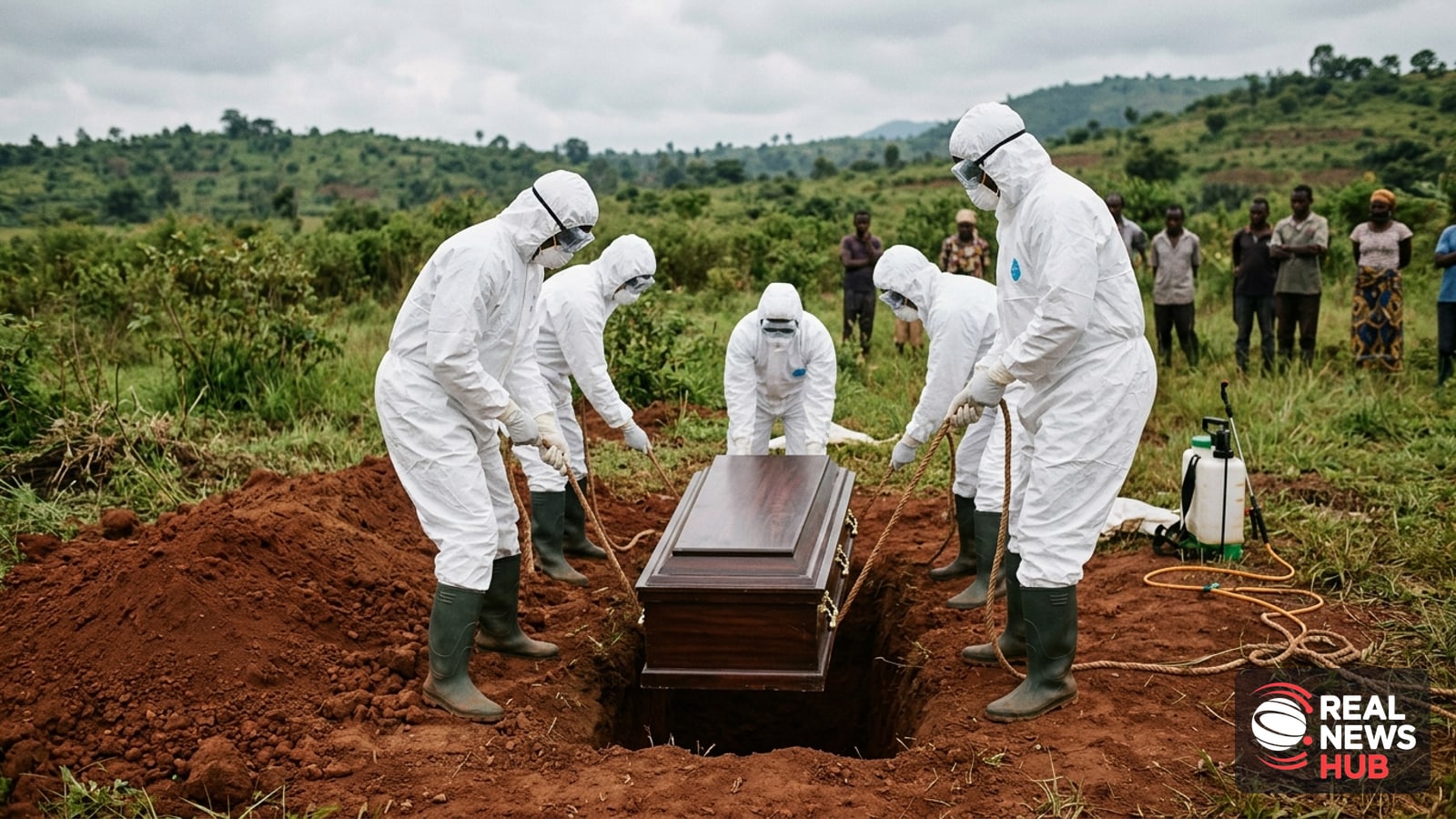
An Ebola outbreak spreading through the Democratic Republic of Congo is colliding with a region already worn down by years of armed conflict, chronic insecurity and a healthcare system stretched thin, according to France 24 Africa.
Stephanie Hoffmann, project coordinator for the city of Butembo in North Kivu province with Doctors Without Borders, known as MSF, described the outbreak as moving into a more dangerous phase. She spoke with France 24's Eve Irvine about conditions on the ground.
According to the report, the center of the epidemic has been shifting away from Ituri province toward North Kivu, and infections are both spreading further and accelerating in pace. Butembo, home to roughly two million people, has emerged as a key flashpoint given its dense population.
Hoffmann said the outbreak is unfolding in a city and region shaped by decades of violence, where fighting and instability have already weakened public health infrastructure long before Ebola arrived. That combination, she indicated, has made the response far more difficult than in areas without ongoing conflict.
Local health workers in Butembo are bearing much of the strain, France 24 reported. Many are treating patients who are also their neighbors or family members, blurring the line between professional duty and personal risk. Hoffmann noted that these workers are frequently doing this demanding work without sufficient protective gear, leaving them exposed to a virus she described as a "terrifying disease."
The lack of adequate protective equipment for frontline staff underscores broader strains on the health system in the area, which was already grappling with the effects of prolonged insecurity before this outbreak began. Hoffmann's account suggests that resource shortages are compounding the challenge of containing transmission in a large, densely packed urban setting.
MSF's presence in Butembo reflects the organization's broader involvement in the Ebola response in eastern Congo, a region that has faced repeated outbreaks of the virus in recent years. France 24 did not provide specific case numbers or a timeline for the current outbreak's progression, focusing instead on the structural conditions complicating the response.
The interview highlighted how armed conflict continues to shape the trajectory of the outbreak, from restricting access for health teams to undermining trust and safety for both patients and workers. Hoffmann's comments point to an emergency response operating under conditions where security concerns and disease containment efforts are deeply intertwined.
France 24 Africa's report did not detail specific government or international measures beyond MSF's engagement in Butembo, leaving the scale of the broader institutional response to the outbreak unclear.
Source & verification
VerifiedReported from France 24 Africa.