

DR Congo’s Ebola outbreak spreads to two new health zones, WHO says
REALNEWS HUB Newsroom
Sep 26, 2026, 05:00 UTC
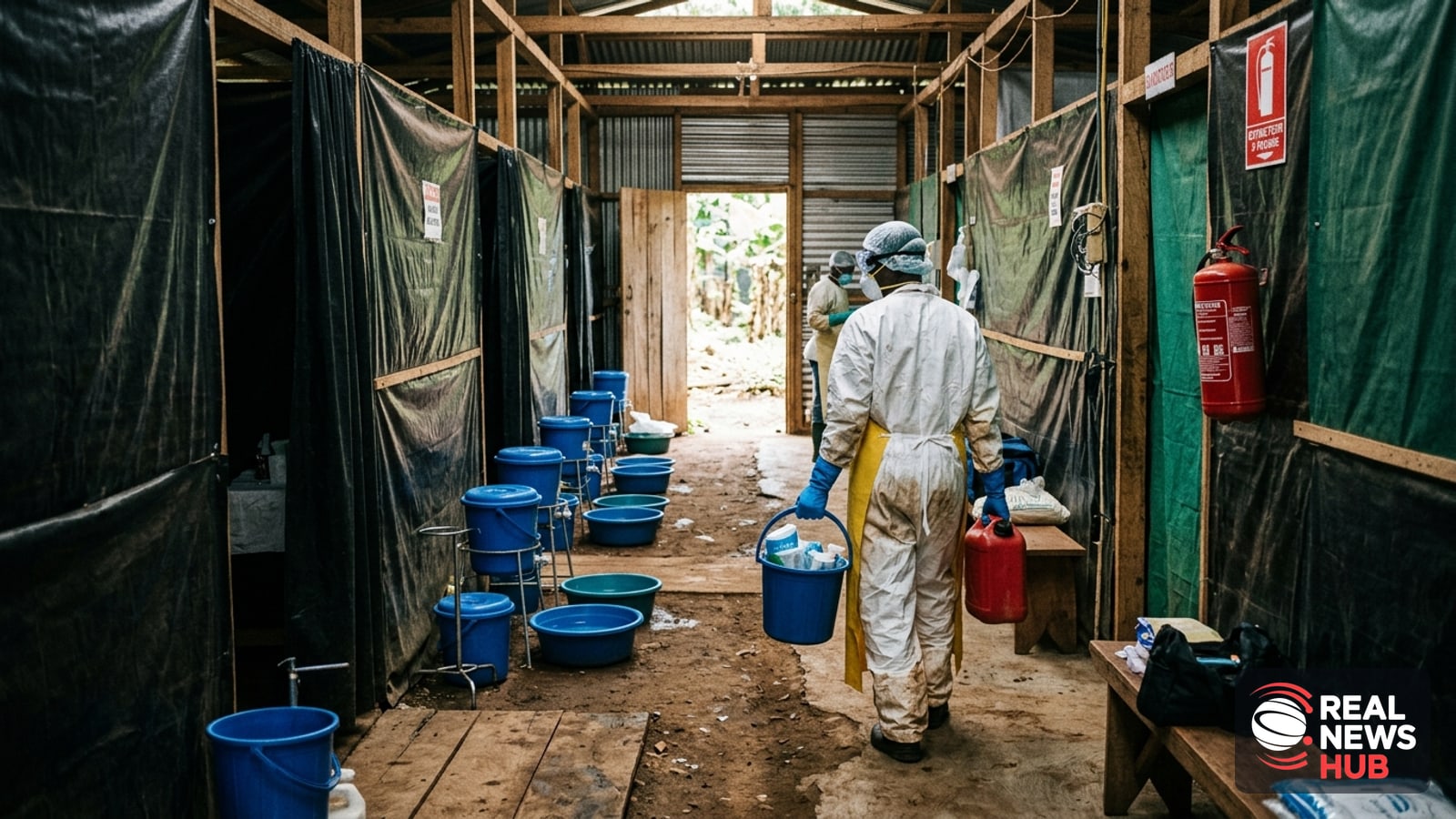
The Ebola outbreak in the Democratic Republic of the Congo has expanded to two additional health zones, the World Health Organization said Friday, as the country continues to battle a fast-moving epidemic driven by the Bundibugyo strain of the virus.
New infections were confirmed in Bulu, located in South Ubangi governorate near the border with the Central African Republic, and in Dungu, in Haut-Uele province along the frontier with South Sudan, according to the WHO. The additions bring the total number of affected health zones to 63 spread across seven provinces, underscoring how widely the disease has traveled since it was first identified.
Congolese health authorities have now recorded 7,890 confirmed cases and 3,799 deaths as of September 23, WHO figures show. That fatality count means nearly half of everyone infected has died, a mortality rate that health officials describe as alarming even by Ebola's historically severe standards.
WHO Director-General Tedros Adhanom Ghebreyesus said the response is being hampered by ongoing conflict in parts of the country, which has forced many residents to flee their homes and made it harder for medical teams to reach communities where the virus is circulating. He noted that displacement and restricted access to certain regions are complicating efforts to trace people who may have had contact with infected patients.
Tedros also pointed out that the Bundibugyo strain poses a particular challenge because no vaccine has yet been approved against it, unlike the Zaire strain responsible for earlier Congolese outbreaks. He said the WHO is working to speed up clinical trials for potential vaccines and treatments targeting this variant.
Contact tracing, a critical tool for containing the virus's spread, appears to be falling well short of what is needed. Dr. Jean Kaseya, head of the Africa Centres for Disease Control and Prevention, said the current caseload should translate into roughly 420,000 contacts requiring monitoring, yet only about 30,000 people are currently on tracing lists. Kaseya warned that once an outbreak takes hold at the community level in this way, containment becomes extremely difficult.
Ituri province, in the northeast, remains the hardest-hit area, with 6,032 confirmed cases since the outbreak began in May, including 868 new cases logged over the past three weeks. North Kivu ranks as the second-most affected province, recording 1,480 cases overall and 567 in the last 21 days alone. The WHO reported Sunday that North Kivu now accounts for roughly a third of all new infections and deaths nationwide, with nearly 60 percent of diagnosed patients there dying, well above the countrywide average of 48 percent.
Medical workers in the region say fear is driving some patients to delay seeking care until their condition has become critical. Dr. Michel Paluku Mukuloli, who works at a hospital in Butembo, North Kivu, said patients often believe that going to a hospital will result in being sent straight to a treatment center to die, a perception that discourages early diagnosis and treatment.
North Kivu previously served as the epicenter of three earlier Ebola outbreaks, including the 2018-2020 crisis that had been the country's most severe until this year. Those earlier outbreaks stemmed from the Zaire strain, which is better understood by researchers than the Bundibugyo variant now spreading. Responders note that early symptoms of Bundibugyo infection tend to be milder and can be mistaken for common illnesses like malaria or typhoid, making early detection more difficult.
Source & verification
DevelopingReported from World News.