

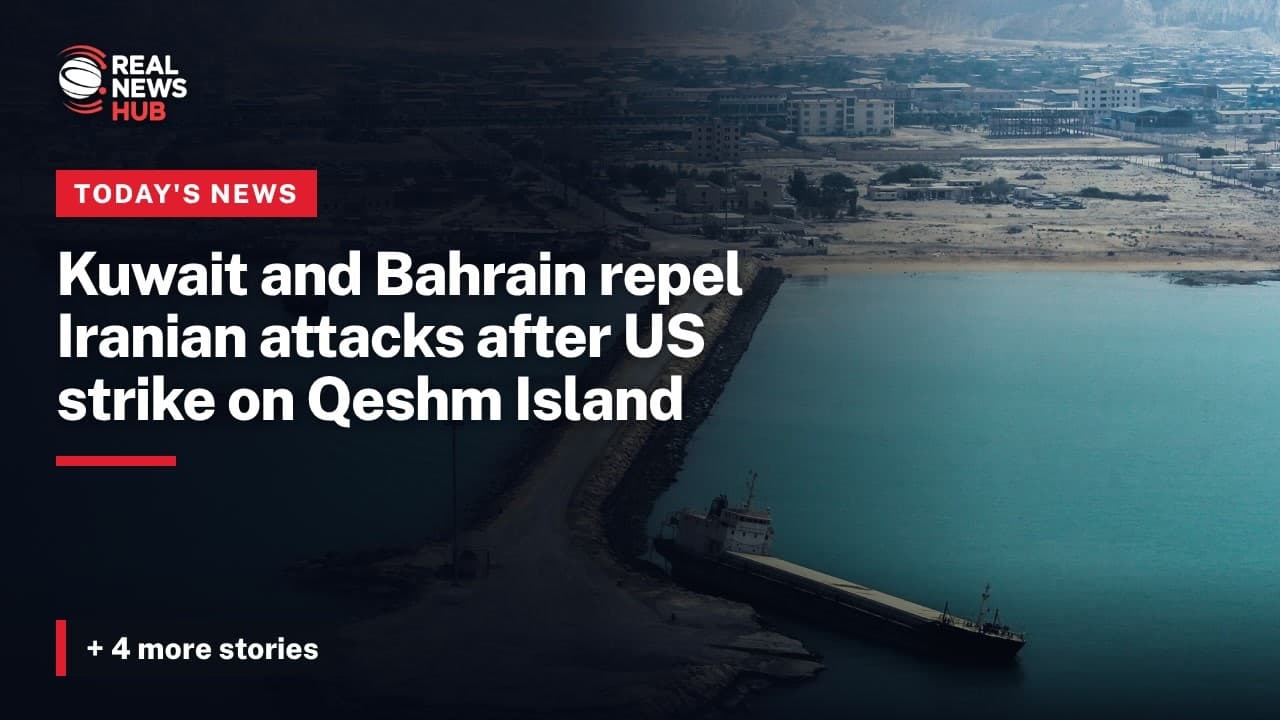
Kuwait and Bahrain repel Iranian attacks after US strike on Qeshm Island
Iranian forces target US military installations in Kuwait, while Bahrain reported multiple interceptions of Iranian aerial attacks, indicating a systematic hostile approach from Tehran

Watch this story
From Kuwait and Bahrain Repel Iranian Attacks After US Strike on Qeshm, starting at 0:30 · Watch on YouTube
Several Gulf states reported on Wednesday, November 18, that they had shot down missiles and drones launched by Iran and by its Houthi allies in Yemen. The fresh exchanges came after a US strike on Qeshm Island, in the Strait of Hormuz, and show fighting picking up in the ninth month of the war even as mediators try to end it, according to Reuters reports carried by Rappler and Daily Maverick.
In Kuwait, the Iranian army said it went after American drone and missile facilities at the Ali Al Salem base. AFP, via Al-Monitor, quoted a statement on Iranian state TV saying drones struck Patriot air defence systems and launch platforms at the site, which it described as belonging to the "terrorist US military". Kuwait's military said its air defences were dealing with hostile drone threats and asked the public to heed safety guidance. Reuters described it as the first Iranian attack on Kuwait since September.
Bahrain, home of the US Navy's Fifth Fleet, said this was the third time this week it had stopped Iranian attacks from the air. It accused Tehran of a "systematic hostile approach" towards the country. AFP reported that on Tuesday explosions were heard across the capital, Manama, and a phone alert told residents to find shelter. Bahrain's armed forces said they destroyed a number of Iranian aerial attacks before they reached their goals. The Revolutionary Guards claimed their combat drones hit a US-operated radar at Sheikh Isa Air Base. Earlier reporting, citing Gulf News, said US Central Command rejected that, saying every incoming drone was downed and there was no damage or injury.
The coalition led by Saudi Arabia against the Iran-backed Houthis said it destroyed a Houthi cruise missile fired towards the Riyadh area.
On Tuesday, according to an anonymous US military official quoted by Reuters and AFP, American fighter jets used precision munitions against a Revolutionary Guards missile launch site on Qeshm Island. The official said it was a reply to Iranian attacks on US personnel and assets. Iranian media, citing an Iranian official, said no infrastructure was damaged.
A separate dispute concerns a possible Iranian plot. President Donald Trump said on Tuesday that Washington was treating the prospect "very seriously", after CNN reported US intelligence assessments of a possible "dirty bomb". AFP said the seven anonymous US officials cited by CNN did not say Iran intended to carry out such an attack. Secretary of State Marco Rubio said on Wednesday he saw no imminent threat to the capital. Iran's Foreign Ministry called the claims "baseless", and Foreign Minister Abbas Araqchi dismissed them as "Iraq War-style propaganda". A dirty bomb uses conventional explosives to scatter radioactive material; it does not cause a nuclear blast.
The war started on February 28 with US and Israeli strikes on Iran. It has since grown to include Iranian attacks on Israel and on American targets around the region. Reuters said it has unsettled the Middle East, lifted global energy prices and fed the voter anger that hurt Trump's Republicans in the November elections.
Diplomacy is running in parallel. Qatari and Iranian officials met on Tuesday; Qatari spokesperson Majed Al Ansari said the aim was "bridging perspectives and narrowing the gap between proposals presented on the ground". Araqchi travelled to Oman, where, according to Oman's Foreign Ministry, he discussed protecting maritime routes and the movement of shipping and trade. He wrote on Telegram that he met Sultan Haitham bin Tariq and outlined Iran's diplomatic initiative for ending the conflict.
Before the war, roughly a fifth of the world's energy supplies passed through the Strait of Hormuz; Iran now partly blocks it. Who controls traffic there is a sticking point in the talks. Tanker attacks have risen sharply since October, and on Tuesday the crew of a liquefied petroleum gas tanker left their vessel off Oman's Khasab. Reuters also said the Houthis have stepped up attacks on Saudi Arabia while tightening their grip on Yemen's Bab el-Mandeb Strait.
Earlier on this story
- Iranians fear strikes on dams, bridges and power plants after US media report on dams
- Iraq restarts Kirkuk-Ceyhan oil exports to Turkey as Hormuz route stays hit
- US denies Iranian drones hit radar in Bahrain; air defences intercept attacks
- Trump vows Iran would "pay a price" if reported dirty bomb plot against Washington is real
- Hormuz tanker attacks slow Gulf shipping as third US carrier arrives, Iran talks continue
Spotted an error? Report it · Editorial standards · Corrections policy
Source & verification
VerifiedReported from Rappler.
Also written from and checked against reports by Al-Monitor and Daily Maverick.
Picture credits
Get breaking news alerts and the Morning Briefing
Verified stories in your inbox, every one linked to its sources. All newsletters →