

Bangkok at breaking point as floods turn streets into stagnant lakes
With 40 dead and a disaster declared across all 50 city districts, experts warn extreme flooding will only worsen across south-east Asia Bangkok is used to absorbing the sudden afternoon downpours that inundate the city during the rainy season. Even streets in many central high-rise districts can briefly turn into rivers, with rats and cockroaches racing out of sewers and taking temporary refuge on trees and buildings as the subterranean world is flushed out. But every city has a breaking point, and this year rain fell so fast and so hard that whole neighbourhoods of the Thai capital have been transformed, not into rivers, but stagnant lakes. In parts of the city, roughly 300mm of rain – the equivalent of half a year of average rainfall in London – fell in about two days. Continue reading...
REALNEWS HUB Newsroom
Oct 3, 2026, 05:26 UTC
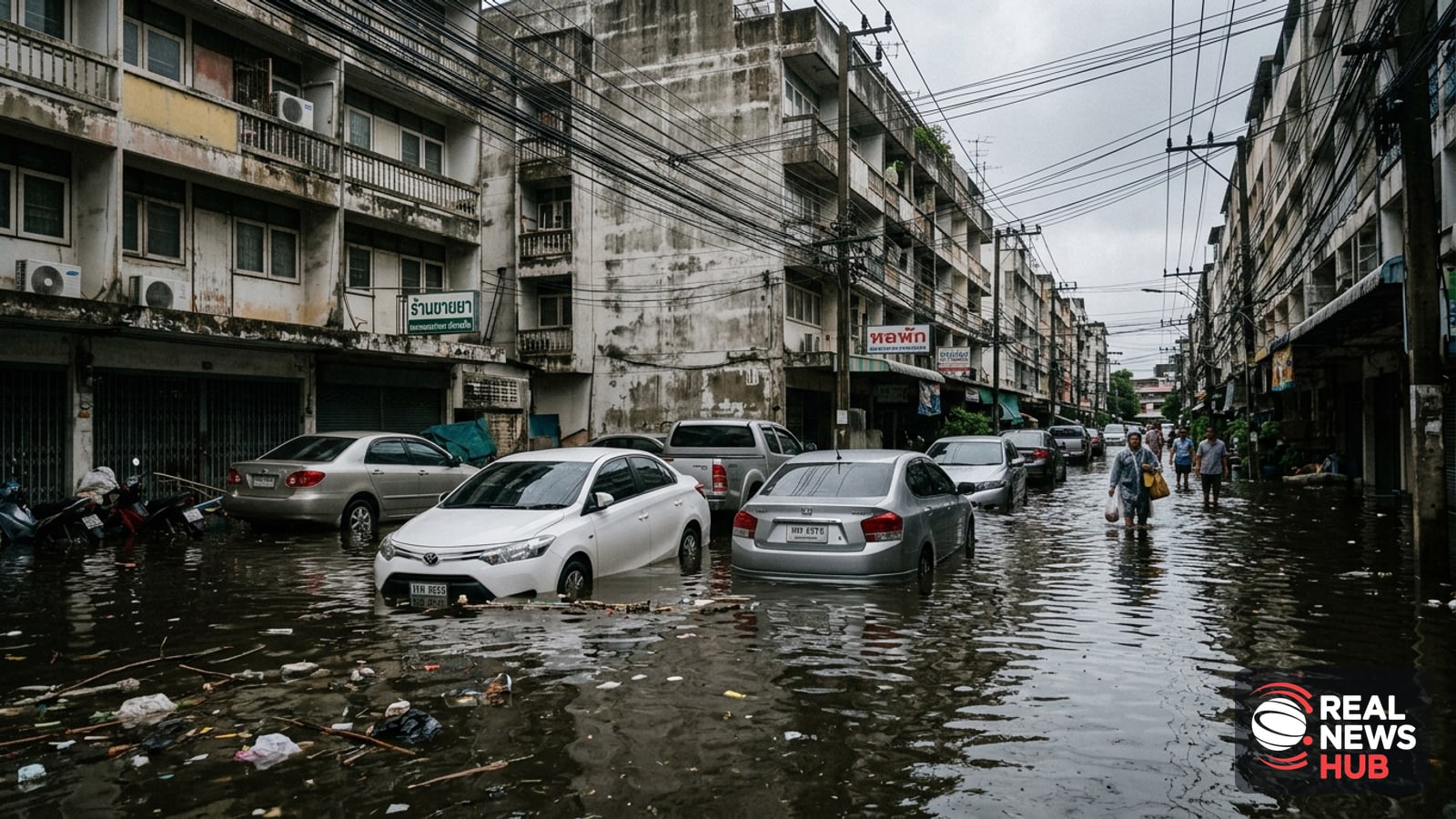
Thai authorities have declared a disaster across all 50 districts of Bangkok after torrential downpours submerged large swaths of the capital, leaving approximately 40 people dead and displacing thousands.
According to government officials, the fatalities were primarily caused by drowning and accidental electrocution. Across the metropolis, thousands of displaced residents have sought refuge in more than 230 temporary shelters set up by authorities. In some districts, roughly 300 millimetres of rain fell over roughly two days, overwhelming urban drainage infrastructure and transforming residential roads into stagnant bodies of water.
Built on the low-lying floodplain of the Chao Phraya River, Bangkok traditionally relies on a complex network of pumps, dikes, and canals to funnel stormwater into the sea. However, decades of rapid development and concrete paving have degraded or covered large portions of those waterways. Urban resilience expert Naim Laeni noted that local canals can cope with roughly 60 to 80 millimetres of rain per hour, but the recent storms unleashed intense, sustained deluge far beyond that capacity, giving the drainage network no time to recover.
The deluge severely interrupted public life and regional transit. At Suvarnabhumi airport, Bangkok's primary international hub, flight cancellations mounted and baggage piled up after roughly half of Thai Airways' ground personnel were unable to reach work due to flooded transit routes. Numerous schools across the capital closed, and broad traffic gridlock left residents stranded at home even in sections of the city that avoided direct inundation.
Thai Prime Minister Anutin Charnvirakul said a dedicated war room was established to track the crisis, warning that the capital remains vulnerable to runoff moving downstream from the north. The national meteorological agency has warned that further heavy precipitation is expected in the coming week.
The extreme event was triggered by a stalled low-pressure system moving from an unusually warm South China Sea across Cambodia and Vietnam before settling over Bangkok, according to data from Copernicus Climate Pulse. Scientists note that an intense El Niño pattern has further complicated weather extremes across the region. Nikolaos Skliris, an ocean researcher at the University of Southampton, pointed out that climate models project a long-term escalation of extreme precipitation events throughout south-east Asia as warmer atmospheric and sea temperatures fuel heavier rainfall.
The weather system also triggered deadly flash floods and landslides in neighboring Myanmar, where at least nine deaths were confirmed in the southern village of Ka Det Nge Htein and several individuals were reported missing amid challenging rescue conditions. In Bangkok, emergency pumps continue operating at capacity, though city officials warn it will take days to clear the remaining water.
Source & verification
DevelopingReported from Guardian World.
Get breaking news alerts and the Morning Briefing
Verified stories in your inbox, every one linked to its sources. All newsletters →