

Explained
Why are Russian strikes still hitting Ukraine's power grid?
Russian aerial attacks have battered Ukraine's energy grid, leaving hundreds of thousands without power despite US claims of a mutual energy ceasefire that Moscow never confirmed.

Watch: Explained in 3 minutes
The REALNEWS HUB Explained video · Watch on YouTube
Key facts
- Russian bombardments have struck major Ukrainian energy sites, cutting power to hundreds of thousands of people.
- US President Donald Trump announced an immediate energy ceasefire between Moscow and Kyiv, but Russia never confirmed it.
- Russian Foreign Minister Sergei Lavrov signaled opposition to a truce, arguing Ukraine should not receive a respite.
- President Volodymyr Zelenskyy said Ukraine received no early warnings from allies before several ballistic strikes.
- The diplomatic dispute is tied to US moves easing sanctions to import Russian diesel ahead of midterm elections.
What damage have the latest strikes caused?
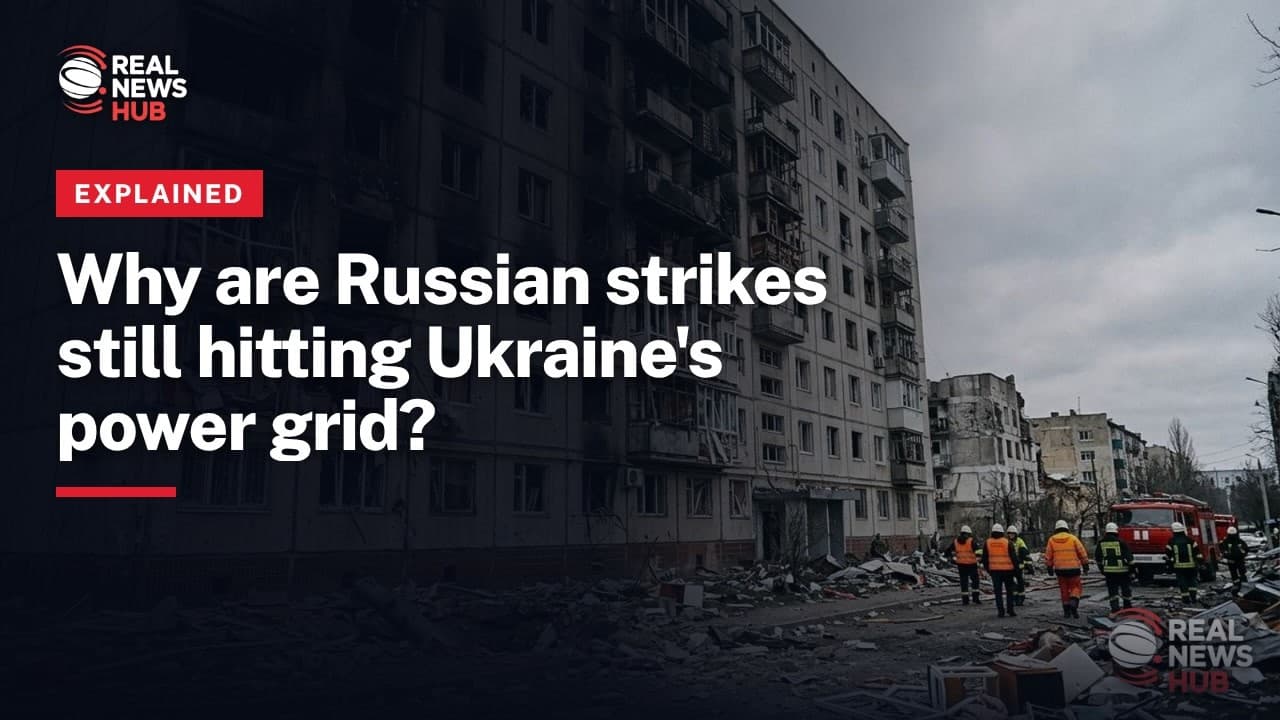
Russian missiles and drones have repeatedly struck power facilities, fuel stations, and residential buildings across Ukraine, including in Kyiv, Kharkiv, and western regions.
The attacks cut power to at least 600,000 residents across the country and led grid operator Ukrenergo to introduce electricity rationing in areas like Kharkiv, Donetsk, and Zaporizhzhia. Damage to sites such as Kyiv's thermal plant No 4 and apartment complexes has caused multiple civilian deaths and injuries. Moscow's defence ministry has defended the operations, describing them as strikes targeting energy networks and communication hubs linked to the Ukrainian military.
Why did the proposed energy ceasefire fail?
United States President Donald Trump posted on social media that Russia and Ukraine had agreed to an immediate energy ceasefire. Ukrainian President Volodymyr Zelenskyy noted the declaration was initially news to him, though he stated Ukraine would halt strikes on Russian facilities if Moscow genuinely reciprocated.
However, the Russian government never verified the truce. Instead, Russian Foreign Minister Sergei Lavrov signaled clear resistance, arguing Ukraine should not receive the respite a pause would provide. Ukrainian officials reported that Russian strikes hit multiple power stations almost immediately after the announcement. European leaders expressed support for the concept of a pause, but diplomats such as EU foreign policy chief Kaja Kallas noted there was no proof Russia was complying.
How is US domestic politics involved?
The ceasefire proposal is closely tied to an arrangement by the Trump administration to import Russian diesel into American and international markets to lower domestic fuel costs ahead of midterm elections. Under this plan, US sanctions were relaxed to allow shipments of Russian fuel.
To safeguard that deal, Washington pressured Kyiv to stop attacking Russian oil refineries, which Ukraine has targeted to restrict Moscow's revenues. Zelenskyy criticized the move as an unjustified concession to Russian President Vladimir Putin, while a bipartisan group of seven US senators argued the transaction violated federal law. Amid the dispute, Trump criticized Zelenskyy and suggested Ukraine should replace its leadership, while Zelenskyy maintained that changing leaders was solely up to Ukrainian citizens.
Why are early warning alerts causing concern?
President Zelenskyy revealed that Ukraine received no advance notifications from foreign partners ahead of consecutive nights of Russian ballistic missile strikes on Kyiv. Ukrainian armed forces rely heavily on allied surveillance to track incoming ballistic weapons and strategic bombers, especially as interceptor stockpiles dwindle.
The absence of warnings occurred amid tension between Washington and Kyiv, including warnings that the US might halt intelligence sharing or freeze European purchases of American Patriot defense systems. While Trump denied that information sharing had ended, Ukrainian Foreign Minister Andrii Sybiha suggested the missing alert may have been related to the specific weaponry deployed by Russia.
Timeline
- Oct 11, 2026Donald Trump declares an immediate energy ceasefire between Russia and Ukraine, but strikes continue.
- Oct 12, 2026Volodymyr Zelenskyy reports six Ukrainian energy installations were hit following the ceasefire claim; Sergei Lavrov rejects giving Ukraine a respite.
- Oct 14, 2026Fresh missile and drone strikes hit Kyiv's thermal plant No 4 and Kharkiv, cutting power to 600,000 people as Zelenskyy notes a lack of partner alerts.
What happens next?
With colder winter weather arriving, Ukrainian authorities anticipate further ballistic strikes against utility networks and have urged residents to seek shelter, while emergency teams continue work to restore damaged electricity lines and ration power.
This explainer was written with AI assistance from REALNEWS HUB's own reporting listed below, and reviewed before publication. How we use AI
Spotted an error? Report it · Editorial standards · Corrections policy
Sources on REALNEWS HUB
- Ukraine power grid and Kyiv housing hit by Russian strikes, killing three · Oct 14, 2026 · via World News
- Kyiv received no partner alerts before Russian ballistic strikes, Zelenskyy says · Oct 14, 2026 · via Guardian World
- Watch: What could Trump's energy ceasefire mean for Ukraine? · Oct 13, 2026 · via BBC News
- Six Ukrainian energy sites hit by Russia since Trump announced ceasefire, Zelensky says · Oct 12, 2026 · via World News
- Trump's 'energy ceasefire' claim welcomed by Zelensky but Russia silent · Oct 11, 2026 · via BBC News
- Trump claims Russia and Ukraine agree to energy ceasefire, but Zelenskyy says this is ‘news for me’ · Oct 11, 2026 · via NBC News Politics