

Explained
Why are Houthi strikes targeting Riyadh airport?
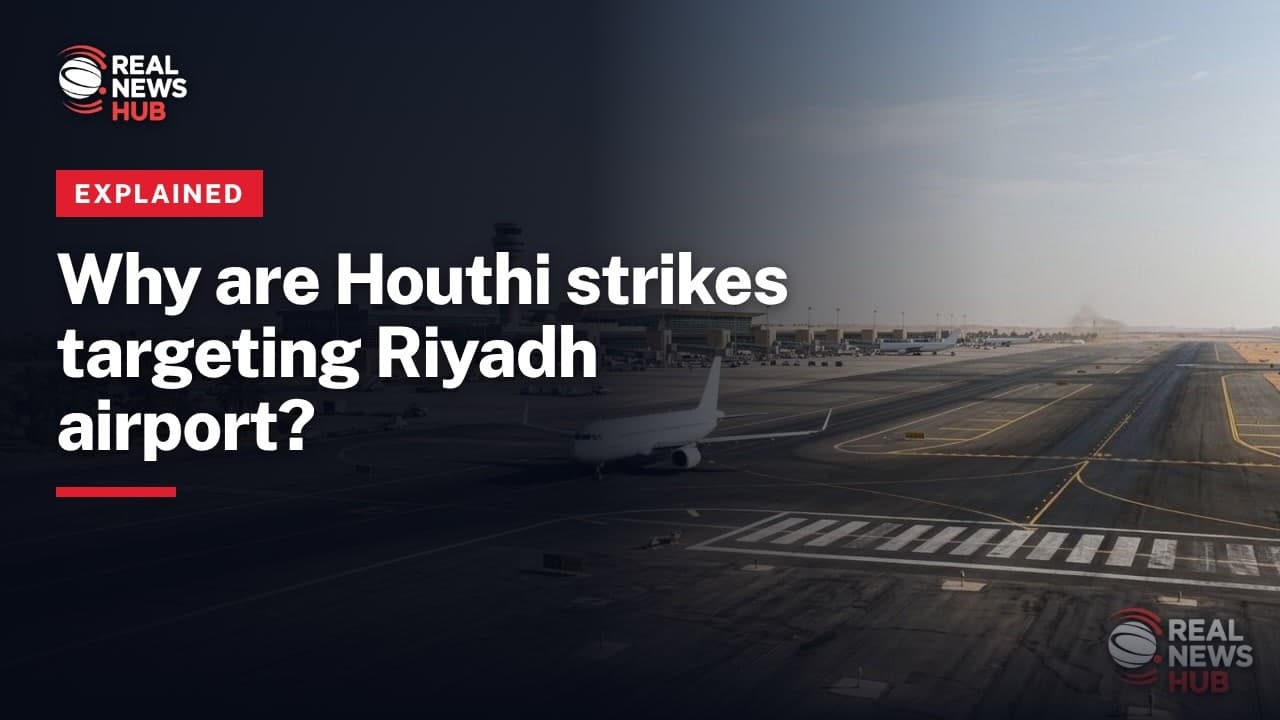
Deadly missile and drone assaults by Yemen's Houthi movement forced a two-week shutdown of Riyadh's international airport, prompting travel warnings and heightening regional tensions.

Watch: Explained in 3 minutes
The REALNEWS HUB Explained video · Watch on YouTube
Key facts
- An Oct. 10 strike on Riyadh airport killed 13 people and injured over 300, the deadliest attack in Saudi Arabia in more than ten years.
- King Khalid International Airport resumed limited domestic and international flights after a two-week shutdown.
- Houthi military officials declared the airport remains an active military target and warned passengers and staff to stay away.
- The escalation followed the breakdown of a multi-year ceasefire between Saudi-led forces and Yemen's Houthi movement over the summer.
- The United States ordered non-essential diplomatic staff and dependents to evacuate Saudi Arabia amid ongoing attacks.
What happened at Riyadh airport?
King Khalid International Airport in Riyadh suspended all commercial operations after a deadly missile and drone strike by Yemen's Houthi movement on Oct. 10. The assault killed 13 people and left more than 300 injured, making it the deadliest single strike inside Saudi borders in over a decade.
Following a two-week halt in traffic, Saudi airport management partially restored service on Sunday. Domestic flights restarted from Terminal 1, while Terminal 2 began accommodating international routes operated by domestic airlines.
What is the current threat to the travel hub?
Despite the restart of commercial aviation, Houthi military spokesman Yahya Saree issued a public warning advising airlines, passengers, and airport workers to avoid the facility entirely. The Iran-aligned group classified the airport as an ongoing military target and asserted that Saudi authorities would bear responsibility for casualties resulting from future attacks.
Attacks aimed at the Saudi capital have persisted. Regional coalition forces reported shooting down a ballistic missile directed at Riyadh, as well as intercepting two drones near the capital and another over the Eastern Province.
Why did the conflict escalate again?
The strikes follow the collapse of a multi-year ceasefire over the summer. Fighting intensified after Houthi units advanced and seized strategic territories near the Red Sea during the preceding month.
In response, the Saudi-led coalition stepped up air raids against Houthi positions and provided military assistance to internationally recognized Yemeni government troops conducting counteroffensives. Throughout the broader conflict, the Houthis have repeatedly used ballistic missiles and uncrewed aircraft against Saudi energy assets, seaports, and civil air infrastructure.
How is the wider region being affected?
The heightened attacks on Saudi Arabia are occurring alongside growing friction across the Middle East. In the Strait of Hormuz, two supertankers carrying over 4.5 million barrels of crude oil were disabled by naval mines in an unauthorized transit route, forcing their crews to abandon ship. Iranian officials have additionally warned that underwater internet cables beneath the strait could face disruption if their facilities come under assault.
Citing heightened threats, the US government instructed non-essential diplomatic personnel and their families to depart Saudi Arabia. Washington has also deployed extra naval forces, including the planned movement of the USS Theodore Roosevelt aircraft carrier strike group, as American officials raised alarms over Iranian plotting against US personnel across the region.
Timeline
- Oct 10, 2026A Houthi strike hits King Khalid International Airport, killing 13 people and injuring over 300.
- Oct 24, 2026Saudi air defences shoot down a ballistic missile fired by Houthis toward Riyadh, while two crude oil tankers strike mines in the Strait of Hormuz.
- Oct 25, 2026Limited flight operations resume at Riyadh airport as Houthi forces issue fresh warnings declaring the facility a target.
What happens next?
Houthi forces have pledged to continue strikes against King Khalid International Airport, while Saudi coalition defences remain on alert after intercepting incoming missiles and drones. Meanwhile, the United States is moving additional naval forces into the region amid warnings of potential strikes against Iranian targets.
This explainer was written with AI assistance from REALNEWS HUB's own reporting listed below, and reviewed before publication. How we use AI
Spotted an error? Report it · Editorial standards · Corrections policy
Sources on REALNEWS HUB
- Riyadh airport restarts air traffic after two-week closure from Houthi strikes · Oct 25, 2026 · via Al-Monitor
- Houthi forces issue new warning against travel through Riyadh airport · Oct 25, 2026 · via Al-Monitor
- Saudi forces intercept Riyadh missile as tankers strike mines near Hormuz · Oct 24, 2026 · via Gulf News