

Explained
What is behind Trump's $15bn Iowa steel plant announcement?
Trump announced a $15 billion steel plant for eastern Iowa timed to boost a Republican Senate candidate, even as polling shows widespread public unease about the economy heading into the midterms.
REALNEWS HUB Newsroom
Sep 29, 2026
Key facts
- Iowa steel plant projected to cost about $15 billion, built by Mesabi Metallics (owned by India's Essar Group)
- Export-Import Bank has committed up to $10 billion in financing; production targeted for 2030
- Democrats need to flip four Senate seats, including Iowa, to regain control
- Inflation is at 3.4%, up from 3.0% when Biden left office; gas prices up about 50% since the Iran conflict began
- 73% of Americans rate the economy as fair or poor, per Guardian polling review
- Job growth has slowed to about 43,000 per month under Trump, down from 145,000 under late Biden
What did Trump announce in Iowa?
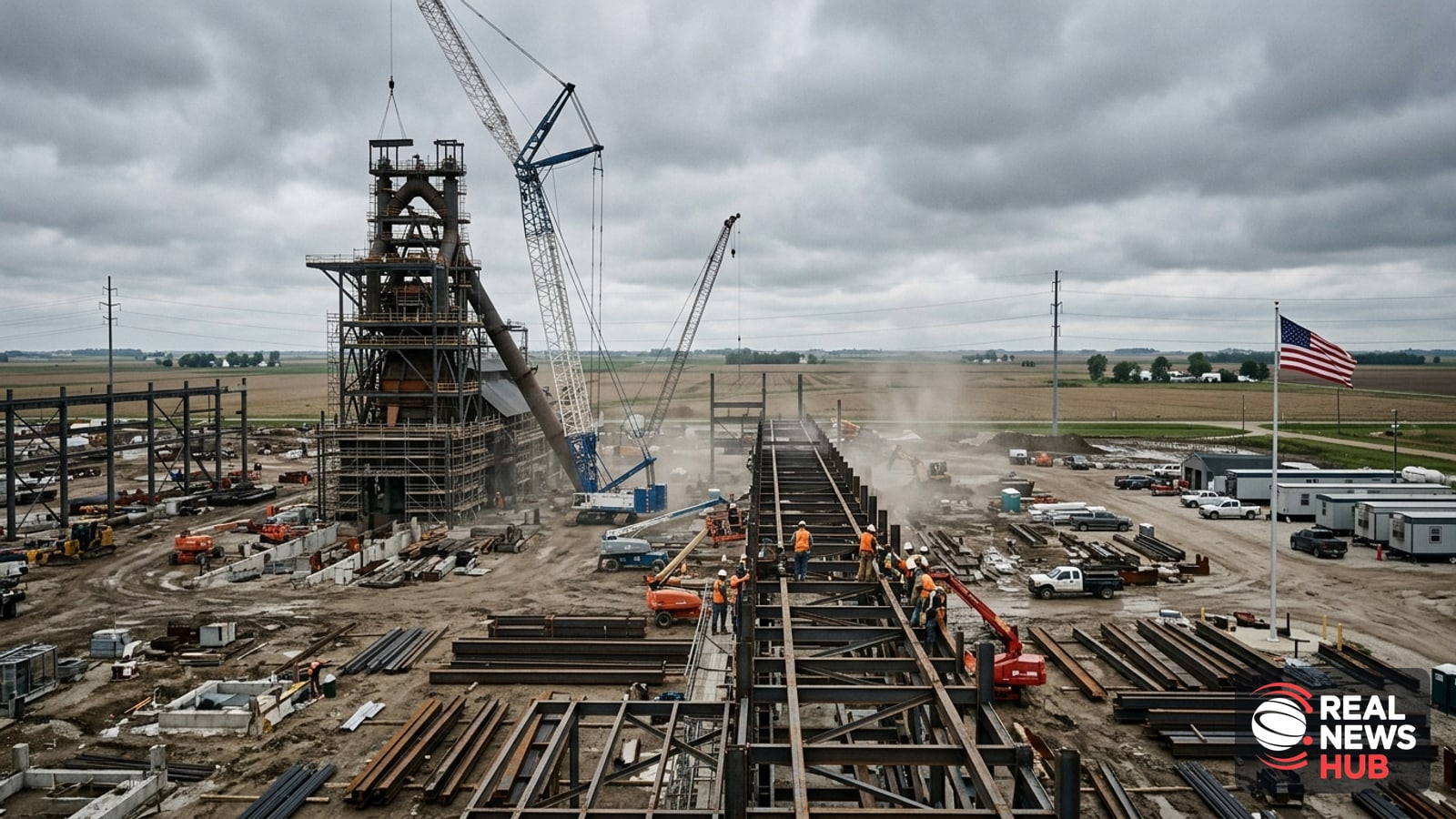
On September 28, Trump announced that what he called the largest steel plant in American history would be built in eastern Iowa by Mesabi Metallics, a company owned by India's Essar Group. A White House official put the cost at roughly $15 billion, with commercial production not expected until 2030, after this year's midterms. The Export-Import Bank, a federal agency, has committed as much as $10 billion in financing for the project.
Trump said the plant would draw iron ore from a Mesabi Metallics mine in Minnesota and credited his tariff policies for attracting the investment, despite the company's foreign ownership. He cited figures of 6,000 construction jobs, close to 2,000 permanent positions, and a $95 billion contribution to the economy.
Why does the Iowa announcement matter for the midterms?
The announcement was made alongside Republican congresswoman Ashley Hinson, who is running for the Senate seat being vacated by retiring Republican Joni Ernst. Democrats have named Iowa as one of four seats they need to flip to take back the Senate in November.
Trump told Hinson he had seen encouraging polling for her, but recent surveys tell a mixed story: a Marist poll had her trailing Democratic opponent Josh Turek by eight points, while an earlier Emerson College poll showed her slightly ahead, though it also found voters worried about tariffs.
What does the broader economic picture look like?
Trump has repeatedly described the economy as the best in the nation's history, but data cited by the Guardian points elsewhere. Inflation has risen to 3.4%, up from 3.0% when Biden left office, while GDP growth slowed to 1.5% in the second quarter, down from 2.7% under Biden. Gas prices have climbed roughly 50% since the conflict with Iran began, reaching about $4.47 a gallon, and the Federal Reserve has raised interest rates over inflation concerns.
Everyday costs have also jumped, including a 52% rise in fuel oil and higher prices for ground beef, seafood, coffee, sugar and electricity. The White House points to a 23% drop in egg prices and recent month-over-month declines in beef, prescription drug and auto insurance costs as signs of progress.
How are voters and economists reacting?
Polling suggests widespread dissatisfaction. A Guardian review found 73% of Americans rate the economy as fair or poor, with 48% saying poor outright. A New York Times/Siena poll found 71% disapprove of Trump's handling of living costs, and a University of Michigan survey recorded the second-lowest consumer confidence reading in its 74-year history. A Marquette Law School poll put Trump's overall approval at just 28%.
Assessments diverge sharply. AFL-CIO chief economist Darrick Hamilton called Trump's economic claims "bluster" and "gaslighting," blaming tariffs and the Iran conflict for self-inflicted price increases. Michael Strain of the American Enterprise Institute described the economy as resilient despite high energy costs, pointing to low unemployment and strong investment. Lindsay Owens of the Groundwork Collaborative said the appearance of strength is propped up by AI investment and wealthy households' spending, which she called a fragile foundation.
What about jobs?
Unemployment sits at 4.1%, close to levels under Biden, though job growth has slowed sharply to an average of about 43,000 positions a month under Trump, compared with 145,000 a month in Biden's final two years. Manufacturing employment has fallen by 35,000 jobs despite tariffs meant to boost domestic industry, though overall hiring rebounded with a gain of 162,000 jobs last month.
Timeline
- AugustMinnesota Governor Tim Walz pauses mining permits near the Boundary Waters wilderness area
- Sep 28, 2026Trump announces $15bn Iowa steel plant plan and describes the economy as the best in the country's history
What happens next?
The Iowa plant is not expected to begin commercial production until 2030, after the midterms, so its economic effects will not be felt by November voters. Polling on the Iowa Senate race and national economic approval remains mixed heading into the election, with Democrats targeting the seat as part of their push to flip four seats needed for Senate control.
This explainer was written with AI assistance from REALNEWS HUB's own reporting listed below, and reviewed before publication.
Sources on REALNEWS HUB
- Trump unveils plan for $15bn Iowa steel plant he calls biggest in US history · Sep 28, 2026 · via Guardian US Politics
- As the US midterms approach, Trump’s boasts on the economy fall flat with voters · Sep 28, 2026 · via Guardian US Midterms 2026